- English
- French
- German
- Portuguese
- Spanish
- Russian
- Japanese
- Korean
- Arabic
- Greek
- German
- Turkish
- Italian
- Danish
- Romanian
- Indonesian
- Czech
- Afrikaans
- Swedish
- Polish
- Basque
- Catalan
- Esperanto
- Hindi
- Lao
- Albanian
- Amharic
- Armenian
- Azerbaijani
- Belarusian
- Bengali
- Bosnian
- Bulgarian
- Cebuano
- Chichewa
- Corsican
- Croatian
- Dutch
- Estonian
- Filipino
- Finnish
- Frisian
- Galician
- Georgian
- Gujarati
- Haitian
- Hausa
- Hawaiian
- Hebrew
- Hmong
- Hungarian
- Icelandic
- Igbo
- Javanese
- Kannada
- Kazakh
- Khmer
- Kurdish
- Kyrgyz
- Latin
- Latvian
- Lithuanian
- Luxembou..
- Macedonian
- Malagasy
- Malay
- Malayalam
- Maltese
- Maori
- Marathi
- Mongolian
- Burmese
- Nepali
- Norwegian
- Pashto
- Persian
- Punjabi
- Serbian
- Sesotho
- Sinhala
- Slovak
- Slovenian
- Somali
- Samoan
- Scots Gaelic
- Shona
- Sindhi
- Sundanese
- Swahili
- Tajik
- Tamil
- Telugu
- Thai
- Ukrainian
- Urdu
- Uzbek
- Vietnamese
- Welsh
- Xhosa
- Yiddish
- Yoruba
- Zulu
Water-Saving Cleaning System: Reducing Water in Slaughterhouse Hygiene
A water-saving cleaning system is a dedicated sanitation solution that provides high-pressure water, cleaning chemicals and compressed air via a centralised network of substations, automatically combined and precisely managed. One of the biggest operating expenditures for slaughterhouses that butcher hundreds of animals a day is water use. These devices save facility-wide water use by up to 60% and comply with food safety requirements including USDA FSIS and ISO 14001 environmental standards. For engineering managers of large scale meat processing facilities, the technology has immediate implications on cost reduction, regulatory compliance and operational efficiency.
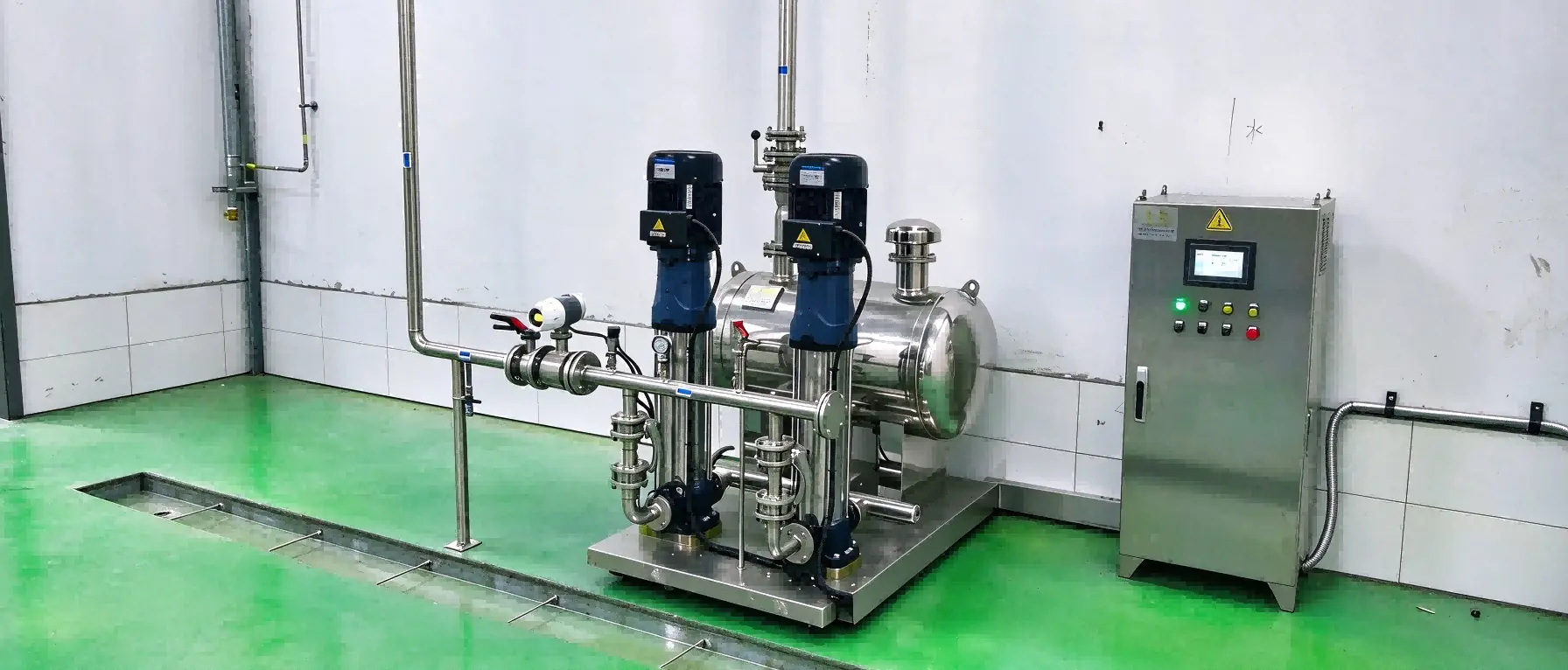
Understanding Water-Saving Cleaning Systems in Slaughterhouses
What Does a Water-Saving Cleaning System Actually Do?
The old hose-down systems are inefficient, just letting the water run and wasting it. A water-saving cleaning system sprays water under pressure from nozzles with narrow openings. High-pressure water, chemical foam agents and compressed air is sent to each substation, automatically mixed by the system. Workers then apply the solution through a spray gun fitted with interchangeable nozzles — no manual mixing, no guesswork.
Why Slaughterhouses Consume So Much Water
The Food and Agriculture Organization (FAO) estimates that major slaughterhouses need between 2,500 and 5,000 litres of water to prepare a tonne of meat. A lot of that volume is for sanitary purposes. Traditional floor hoses and open-nozzle spray systems provide water at low pressure but large volume, so cleaning professionals need to use more water to get the same pathogen-reduction outcomes.
The Role of Pressure and Chemical Dosing
Pressure matters more than volume in effective sanitation. Working pressure 15–100 bar – totally adjustable throughout the system High-pressure jets penetrate biofilm and organic residue missed by low pressure procedures. The chemical dosing is automated at each substation ensuring uniform foam density and disinfectant concentration for each cleaning cycle, avoiding chemical wastage and human mistake.
Challenges with Traditional Cleaning Methods and How This System Addresses Them
The Hidden Costs of Conventional Sanitation
Most of the time, plant managers don't realize how much traditional ways of cleaning cost beyond the cost of water. Extra garbage needs to be treated before it can be released, which costs money and follows rules. Sanitation problems that don't follow the rules can lead to failed USDA inspections, production stops, or product recalls, all of which cost a lot more than the water itself.
How Automated Substations Change the Process
The tri-function substation is the main part of a new water-saving cleaning system. The three cleaning procedures offered by each station are performed in a fixed sequence of rinse, foam cleaning and spray disinfection. Your team may customise the method for a variety of surfaces like polished concrete, rubber conveyor belts, drain lines or stainless steel equipment. There is no more trial and error with this, wasting time and resources when done by hand.
Real Efficiency Gains Backed by Data
Independent case studies from food processing plants in North America and Europe show that water use dropped by 30–40% after organized high-pressure cleaning networks were put in place. The Huamei Wanbang cleaning system uses up to 60% less water than traditional hose-and-bucket methods, thanks to small-aperture nozzle technology. This is done without affecting the results of the hygiene check.
Key Features and Benefits of This Water-Saving Cleaning System
There are five main engineering features that make up the Homey Wonbond water-saving cleaning system. These features directly address the practical concerns of butcher engineering departments.
One of the best things about this method is that it:
- Small-aperture high-pressure nozzles concentrate water delivery at the cleaning surface, reducing total volume while increasing mechanical force against organic residue. This directly lowers your daily water meter reading.
- Automated multi-media mixing at each substation eliminates manual chemical preparation. High-pressure water, foam chemicals, and compressed air feed into each tri-function station and mix automatically, ensuring consistent output every shift.
- Three-stage cleaning sequence – rinse, foam, disinfect – follows best practice in food sector pathogen prevention. You may change ratios of chemicals each step so your team can respond to daily soil loads without changing equipment.
- Stainless steel construction throughout meets food-grade and pharmaceutical-grade material standards. All wetted components resist corrosion from alkaline and acidic cleaning agents within normal operational pH ranges.
- Scalable substation layout means the system adapts to your facility's footprint. Whether you operate a mid-size beef processing line or a large multi-species slaughter facility, the number and placement of substations is fully customizable.
Scalable substation layout implies the system may be scaled to meet your building size. With a medium-size beef processing line or a large multi-species abattoir, you may choose the number and location of substations to fit your demands.
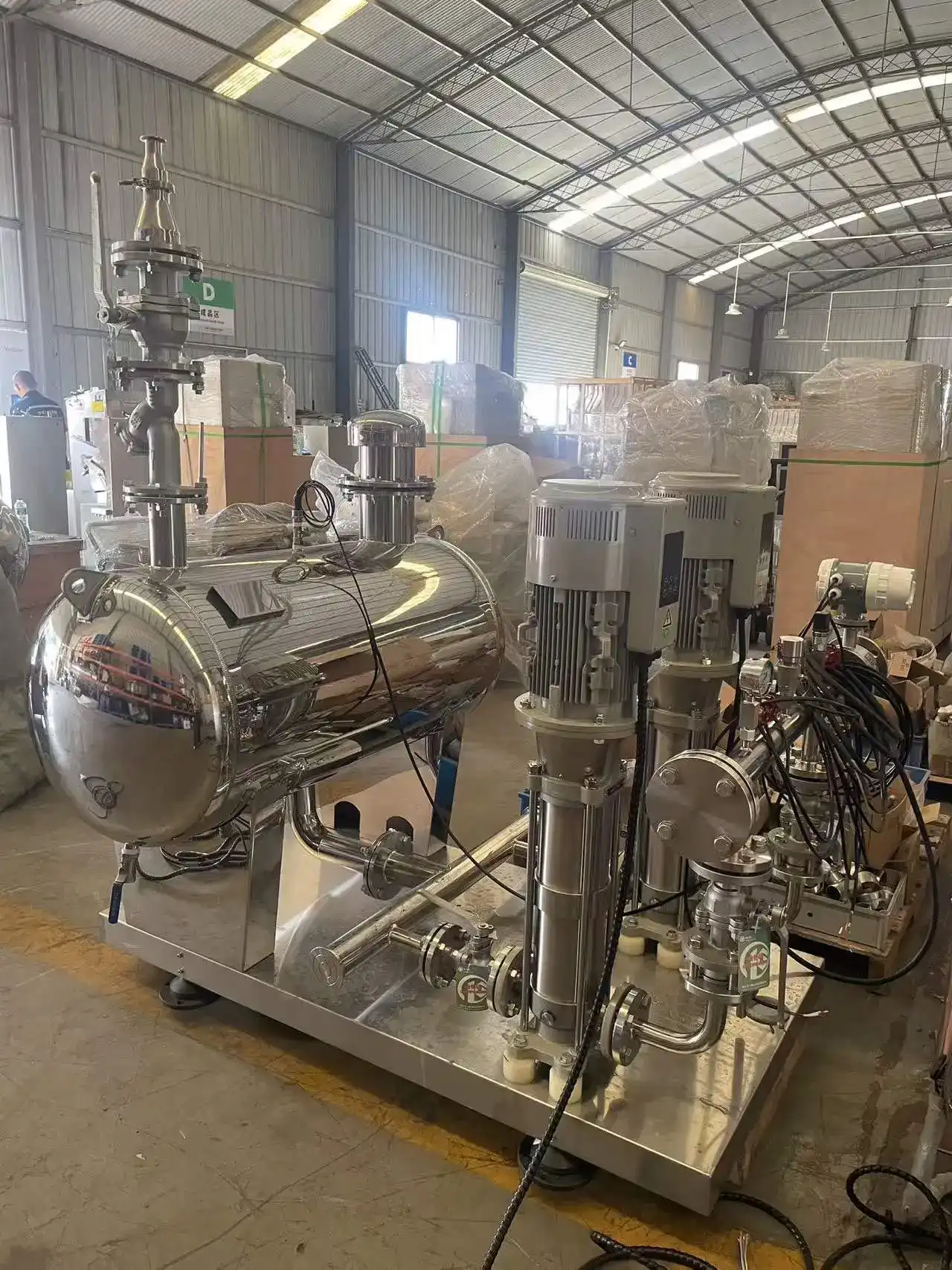
How to Choose the Right System for Your Slaughterhouse
Assess Your Facility Before Specifying Equipment
Before you ask for a quote, write down the total floor area, number of cleaning zones, daily production flow, and water supply pressure of your building. No matter how well the engineers design it, a centralized water-saving cleaning system that is the wrong size—with too few substations or not enough supply pressure—will not work well.
Prioritize Certifications and Compliance Documentation
USDA FSIS rules must be followed by all U.S. slaughterhouses when using a water-saving cleaning system. As a minimum, look for suppliers who have both CE approval and ISO 9001 quality control certification. Products made by Huamei Wanbang have CE approval and follow EU REACH chemistry rules. People who want to get ISO 14001 approval for environmental management will find that this system's recorded data on water reduction directly supports their audit proof.
Note: For food-grade production standards and Halal/Kosher credentials, customers must show valid certificates before they can buy. Export orders must follow the rules of the country where they are going, such as those set by the EU, the FDA, or the Saudi SFDA.
Evaluate Total Cost of Ownership, Not Just Purchase Price
Compare systems by looking at how much water and chemicals they use, how much they save on garbage treatment, and how much upkeep work they need. A cleaning device that uses less water and costs more up front will usually pay for itself faster in lower energy bills. Standard systems from Huamei Wanbang are sent out right away, and special setups are ready 14 business days after the order is confirmed.
Installation, Operation, and Maintenance Best Practices
Pre-Installation Site Assessment
A good site study figures out where to put substations, pipes, chemical storage, and the amount of compressed air that is needed. Huamei Wanbang offers both on-site installation help and remote expert advice. This lowers the chance of commissioning delays that could affect the schedule of an engineering project.
Daily Operational Protocols
Plan cleaning cycles around work shifts to give surfaces as much touch time as possible. At the start of each shift, check the system pressure at each center. Change the chemical dose rates based on the daily dirt load; days with more work need more foam in the pre-rinse stage.
Preventive Maintenance Schedule
Check hose reels and high-pressure hoses once a week for wear and kinks. In order to keep the spray pattern from getting worse, clean the tip orifices once a month. At the end of each production week, flush the chemical injection lines at each substation. Homey Wonbond's technical support team is available 24 hours a day, seven days a week. They can help with online testing, which cuts down on the need for expensive service calls to the customer's location.
Conclusion
The amount of water used in slaughterhouses is both a legal issue and a cost management problem. A well-designed water-saving cleaning system does all of these things: it reduces water use by up to 60%, supports ISO 14001 environmental compliance, and lowers energy costs throughout the whole cleaning plan. This technology can be used in both small and large meat processing plants because it has a three-stage process, automated chemical mixing, and a scalable substation design. Huamei Wanbang has been in the food production business for 18 years, is CE and ISO 9001 certified, and offers full after-sales support. Their method is designed to meet the needs of current food production.
FAQ
1. How much water can this system actually save?
Compared to traditional hose-based methods, the Huamei Wanbang water-saving cleaning system reduces water consumption by up to 60%. Actual savings depend on your current baseline usage, facility layout, and cleaning frequency. Most mid-size slaughterhouses see measurable reductions within the first billing cycle after installation.
2. Is the system compatible with existing slaughterhouse infrastructure?
Yes. The centralized supply network connects to your existing water and compressed air supply. Substation count and pipe routing are fully customizable, which means the system integrates with your current floor plan without requiring major structural changes.
3. What certifications does the system carry?
The system carries CE certification and complies with EU REACH chemical regulations. Manufacturing follows ISO 9001 quality management standards. Buyers with specific food-grade, Halal, or Kosher documentation requirements should confirm certificate validity prior to procurement.
Get a Water-Saving Cleaning System Quote from Homey Wonbond
The water-saving cleaning system in your slaughterhouse should work as hard as the production line. Homey Wonbond offers cleaning system options that use less water and come with CE certification, 18 years of experience in the food business, and technical help available 24 hours a day, 7 days a week. You can email our team at frank@hmwbcleaning.com or go to hmwbcleaning.com to ask for a facility assessment, a product specification sheet, or a quote for buying in bulk. We answer in one business day.
References
1. Food and Agriculture Organization of the United Nations. Environmental and Social Standards for Meat Processing. FAO, 2019.
2. United States Department of Agriculture Food Safety and Inspection Service. Sanitation Performance Standards Compliance Guide. USDA FSIS, 2021.
3. International Organization for Standardization. ISO 14001:2015 Environmental Management Systems — Requirements with Guidance for Use. ISO, 2015.
4. Meat and Poultry Magazine. Water Conservation Strategies in Modern Slaughter Facilities. Meat and Poultry, 2022.
5. European Food Safety Authority. Hygiene Requirements for Slaughterhouses and Meat Processing Plants. EFSA Journal, 2020.
6. Water Research Foundation. Industrial Water Efficiency Benchmarking for Food Processing Facilities. Water Research Foundation, 2021.
Learn about our latest products and discounts through SMS or email