- English
- French
- German
- Portuguese
- Spanish
- Russian
- Japanese
- Korean
- Arabic
- Greek
- German
- Turkish
- Italian
- Danish
- Romanian
- Indonesian
- Czech
- Afrikaans
- Swedish
- Polish
- Basque
- Catalan
- Esperanto
- Hindi
- Lao
- Albanian
- Amharic
- Armenian
- Azerbaijani
- Belarusian
- Bengali
- Bosnian
- Bulgarian
- Cebuano
- Chichewa
- Corsican
- Croatian
- Dutch
- Estonian
- Filipino
- Finnish
- Frisian
- Galician
- Georgian
- Gujarati
- Haitian
- Hausa
- Hawaiian
- Hebrew
- Hmong
- Hungarian
- Icelandic
- Igbo
- Javanese
- Kannada
- Kazakh
- Khmer
- Kurdish
- Kyrgyz
- Latin
- Latvian
- Lithuanian
- Luxembou..
- Macedonian
- Malagasy
- Malay
- Malayalam
- Maltese
- Maori
- Marathi
- Mongolian
- Burmese
- Nepali
- Norwegian
- Pashto
- Persian
- Punjabi
- Serbian
- Sesotho
- Sinhala
- Slovak
- Slovenian
- Somali
- Samoan
- Scots Gaelic
- Shona
- Sindhi
- Sundanese
- Swahili
- Tajik
- Tamil
- Telugu
- Thai
- Ukrainian
- Urdu
- Uzbek
- Vietnamese
- Welsh
- Xhosa
- Yiddish
- Yoruba
- Zulu
How Does a Water-Saving Cleaning System Cut Water Use?
A water-saving cleaning system reduces water consumption by combining high-pressure, low-flow nozzle technology with automated chemical dosing and closed-loop distribution. Instead of flooding surfaces with large volumes of water, the system delivers precisely controlled bursts of pressurized water, foam, and disinfectant through small-aperture nozzles at each substation. This targeted delivery approach means less water is wasted between cleaning stages. Facilities that switch to this type of system regularly report water reductions of 30–60% compared with conventional hosing methods, without any drop in sanitation performance or hygiene audit results.
Understanding Water-Saving Cleaning Systems
What the System Actually Does
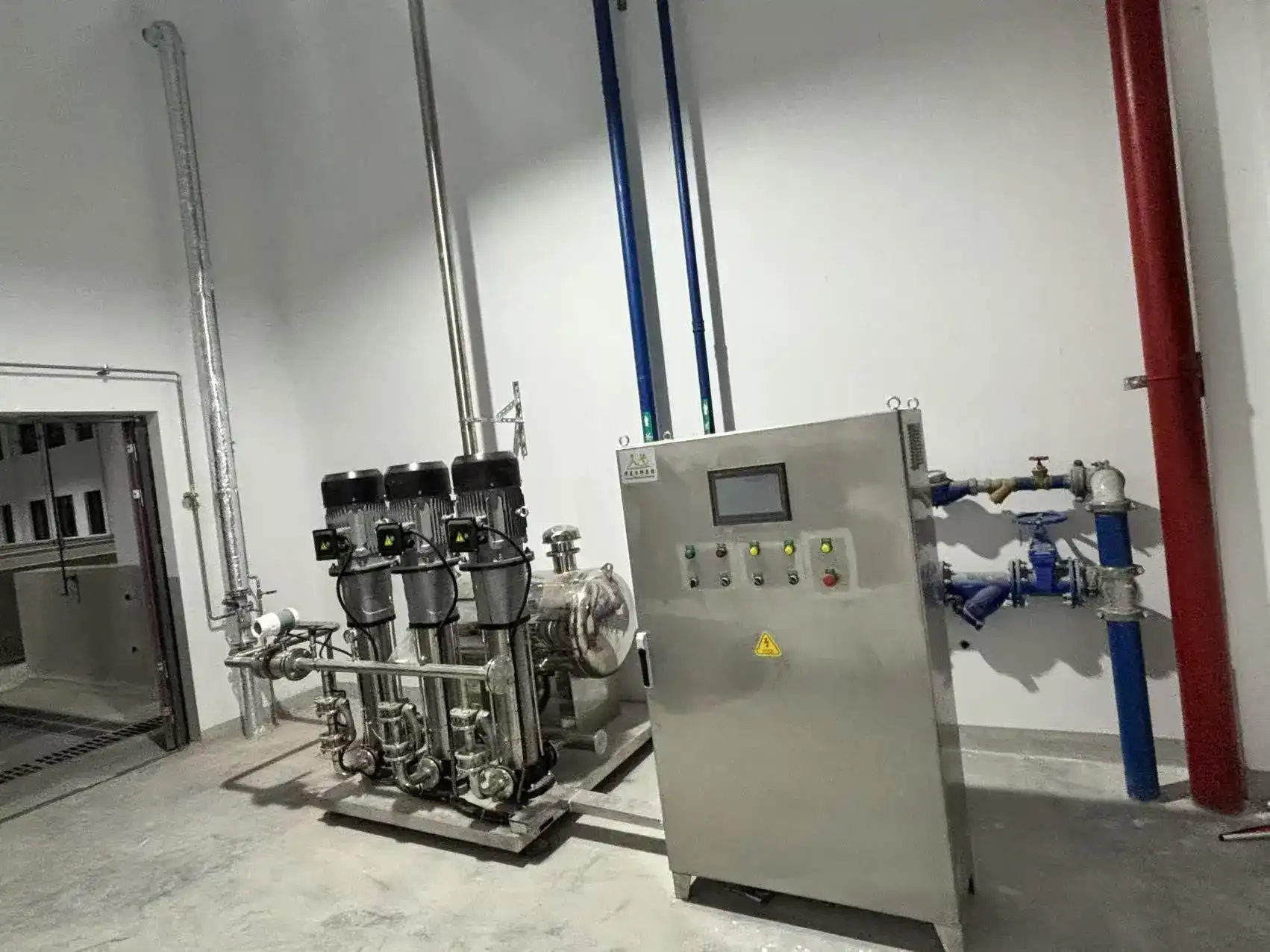
This machine only puts the sources of high pressure water, cleaning chemicals and compressed air all in one place. All three media are piped from a central control point to three-purpose substations placed throughout the facility. At each substation the three inputs are blended automatically in predefined ratios, without any human measurement, chemical wastage or continuous water flow as an operator changes a bucket.
Key Components You Need to Know
The structure of the system is important for planning the installation. These are the main parts of an installation that make it whole:
- Main Control Station: The central hub that regulates water pressure, chemical feed rates, and compressed air supply across the entire pipeline network.
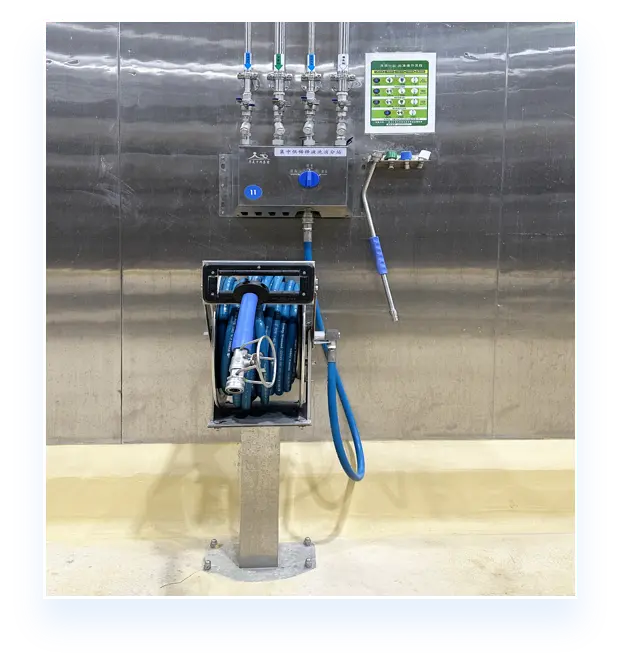
- Tri-Function Substations: Individual work points that deliver three cleaning modes—rinse water, foam, and spray disinfectant—through a single ergonomic spray gun.
- High-Pressure Hose Reel and Hose: Retractable, reinforced hoses rated for continuous industrial pressure, keeping work areas organized and reducing tripping hazards.
- Spray Gun and Small-Aperture Nozzles: Interchangeable nozzle heads control droplet size and spray pattern, directly determining how much water is used per square meter of surface cleaned.
Instead of being different pieces of tools, these parts work together as a single unit. This integration is what lets facility planners handle and measure how much water the whole business uses from one place.
Industrial vs. Residential: Why the Distinction Matters
Low-flow showerheads and efficient dishwashing are two examples of home appliances that use less water. They work at low pressures and flow rates. Industrial equipment that saves water works at pressures of 15 to 100 bar, doses chemicals on a large scale, and must be made of materials that are safe for food or medicine. Because the whole Homey Wonbond cleaning system is made of stainless steel, it saves water, meets the standards for food-contact surfaces, and supports the goals of ISO 14001 environmental management.
Benefits of Water-Saving Cleaning Systems for Businesses
Measurable Reduction in Water and Energy Bills
Normal low-pressure hose doesn't have as much mechanical cleaning power per liter of water as high-pressure, small-aperture tip technology. The U.S. Environmental Protection Agency says that a lot of the freshwater that is taken out of the ground across the country comes from industrial facilities. Switching to a cleaning system that uses less water and better pressure can cut the amount of water used by the whole plant by up to 60%. This means lower water bills and lower costs for treating wastewater.
Supporting ISO 14001 and Environmental Compliance
As part of their ISO 14001 environmental management certification, many medium to large food preparation companies are now required—or highly encouraged—to show proof of lowering their water use. The audit process is easy if you have a water-saving cleaning system that saves water and has output data that can be measured. The system also helps reuse programs for reclaimed water by lowering the total volume of effluent. This helps facilities follow local rules about how much they can discharge.
Strengthening ESG and Brand Position
More and more, corporate buyers, retail chains, and public food service clients are asking providers to show measures for environmental performance. A building that can prove it has cut its water use by 30% or more by using an auditable low-water-consumption cleaning system will have a clear advantage in supplier approval reviews and ESG reporting.
Comparing Water-Saving Cleaning Systems vs Traditional Systems
Water Consumption: The Numbers Side by Side
In a typical medium-sized abattoir, the traditional method of hosing floors and walls may require between 8 and 15 litres of water per square metre every cleaning cycle. In the case of a centralised system of water saving, working at a pressure of 40–80 bar and using narrow aperture nozzles, the value is usually reduced to 3–6 litres per square metre. For a 2,000-square-meter-per-shift facility, that difference is tens of thousands of litres saved per day.
Cleaning Performance and Hygiene Outcomes
Some plant managers are concerned that decreasing water levels might lead to worse cleanliness ratings. In fact the opposite is often the case. High pressure foam spray is better at getting into biofilm and organic residue than low pressure high volume washing. A water saving cleaning system provides a three-part procedure of rinse, foam clean, spray disinfect, with each step chemically and mechanically optimised, not only the amount of water to flush the surfaces.
Maintenance Requirements and Total Cost of Ownership
Traditional hose-and-bucket arrangements require very little upfront investment but result in high ongoing expenses: over-application of chemicals, high water bills and time spent by staff manually managing equipment. A modular centralised system has a higher upfront cost but reduces the daily labour, chemical waste and water costs all at the same time. Most facilities recoup the installation cost within 18-36 months depending on plant size and local water tariffs.
How to Select and Procure the Right Water-Saving Cleaning System
Criteria That Matter Most to Engineering Teams
When judging engineering departments in food processing plants, these are the things that always matter the most:
- Pressure range and adjustability: A working pressure of 15–100 bar covers everything from delicate equipment rinsing to heavy-duty floor and drain cleaning. Confirm that the system you source can be field-adjusted without specialist tools.
- Number and placement of substations: The right substation count for a water-saving cleaning system depends on your facility floor plan and the number of simultaneous cleaning operators. Homey Wonbond configures systems from three substations to thirty or more.
- Material certification: Stainless steel construction is non-negotiable for food-grade environments. Verify that all wetted components meet food-contact surface standards before signing a purchase order.
- Chemical compatibility: The dosing system must handle both alkaline foam cleaners and acidic descaling agents without corrosion or cross-contamination between chemical types.
Before the 8–12 week procurement plan starts, these things should be approved in writing. This way, the installation scope is set early on and there are no delays in the project.
Supplier Credibility and After-Sales Support
A company that sells water-saving cleaning systems should have third-party approvals that can be checked. Homey Wonbond has chemistry paperwork that is REACH-compliant and is CE-certified. Controls in the ISO 9001 quality management system cover the whole process of making something, from the raw materials to the end review. Standard system setups ship from stock, which is helpful for EPC project managers who have tight schedules after the award. Custom configurations are made within 14 business days of order approval.
Installation, Operation, and Maintenance Best Practices
Site Preparation and System Integration
Before installation, the engineering team should make sure that the pipelines, substations, and chemical storage are all in the right places. For water and compressed air, the main control station needs its own service link. By working with the supplier of the water-saving cleaning system to plan this layout during the design phase, you can avoid having to do expensive repairs during commissioning.
Daily Operation for Maximum Water Savings
When you use a wide-angle tip at maximum pressure on a lightly filthy surface, you waste energy and speed up the wear on the nozzle. The most efficient approach to maintain the system's efficiency levels high is to educate personnel how to use the proper tool and set the right pressure for the task.
Maintenance Schedule to Protect System Life
Regular repair keeps the device working as it should. Important jobs are:
- Weekly: Inspect nozzle apertures for wear or partial blockage; replace nozzles showing visible erosion.
- Monthly: Check hose reel retraction tension and inspect hose fittings for micro-leaks.
- Quarterly: Verify chemical dosing pump calibration against the target ratios for foam density and disinfectant concentration.
- Annually: Full pipeline inspection and pressure test to confirm system integrity.
Homey Wonbond offers remote technical help 24 hours a day, seven days a week, and can schedule on-site service calls when needed. This keeps downtime to a minimum for the life of the system.
Conclusion
A correctly designed water-saving cleaning system may shift the attitude a facility takes to cleanliness from an expensive high volume chore to a monitored and measured one. Controlled chemical dosing, small aperture nozzles and a three step cleaning procedure typically save 30-60% of the water consumed by previous techniques. Clearly food processing factories, slaughterhouses and central kitchens that wish to gain ISO 14001 accreditation save their operational costs and safeguard the environment are making a compelling financial argument. Structured procurement can be used on a normal 8–12 week project timeline because the technology has been tested, the parts are standardized, and the ecosystem of suppliers is mature enough to support it.
FAQ
1. How much water can a facility realistically save?
Most medium- to large food processing plants say that they use 30% to 60% less water now that they have a centralized high-pressure water conservation system. The exact number relies on how much power is already being used, the size of the building, and how many substations are set up. Before you buy, Homey Wonbond can figure out how much you could save by using your current water bills and floor plan to make an estimate.
2. How many substations does my facility need?
The number of substations you need depends on how many cleaning zones your facility has, how many operators are working at the same time, and how far away the main control station is. There's no certain way to do it. Engineers from Homey Wonbond will look at your floor plan and suggest a layout that makes all of your cleaning points accessible without making workers wait.
3. Is the system compatible with existing PLC controls?
Yes. The system can work with the variable-frequency pump drives and PLC control screens that are already in your building. This lets you keep an eye on chemical dosing and water use from one place using the interface you already have for supervisors.
Get in Touch with Homey Wonbond for a Tailored Water-Saving Solution
For 18 years, Homey Wonbond has been helping food processing plants and slaughterhouses meet environmental standards and cut down on water use by providing them with proven water-saving cleaning system solutions that use less water. Our engineers set up each system so that it works with the way your facility is set up, the pressure needs you have, and your compliance goals. Get in touch with us right away to get a plant-specific review or a price on our food industry cleaning system that uses less water. To find out more, email our team at frank@hmwbcleaning.com or go to hmwbcleaning.com.
References
1. U.S. Environmental Protection Agency. Water Efficiency in the Food Processing Industry. EPA, 2019.
2. International Organization for Standardization. ISO 14001:2015 Environmental Management Systems — Requirements with Guidance for Use. ISO, 2015.
3. Water Research Foundation. Industrial Water Use Benchmarking and Conservation Strategies. Water Research Foundation, 2020.
4. U.S. Department of Energy. Energy and Water Efficiency in Industrial Cleaning Operations. DOE Office of Industrial Technologies, 2018.
5. Food and Agriculture Organization of the United Nations. Water Use in Food Processing and Agro-Industrial Facilities. FAO, 2017.
6. American Society of Sanitary Engineering. High-Pressure Cleaning Systems: Performance Standards and Water Conservation Metrics. ASSE, 2021.
Learn about our latest products and discounts through SMS or email