- English
- French
- German
- Portuguese
- Spanish
- Russian
- Japanese
- Korean
- Arabic
- Greek
- German
- Turkish
- Italian
- Danish
- Romanian
- Indonesian
- Czech
- Afrikaans
- Swedish
- Polish
- Basque
- Catalan
- Esperanto
- Hindi
- Lao
- Albanian
- Amharic
- Armenian
- Azerbaijani
- Belarusian
- Bengali
- Bosnian
- Bulgarian
- Cebuano
- Chichewa
- Corsican
- Croatian
- Dutch
- Estonian
- Filipino
- Finnish
- Frisian
- Galician
- Georgian
- Gujarati
- Haitian
- Hausa
- Hawaiian
- Hebrew
- Hmong
- Hungarian
- Icelandic
- Igbo
- Javanese
- Kannada
- Kazakh
- Khmer
- Kurdish
- Kyrgyz
- Latin
- Latvian
- Lithuanian
- Luxembou..
- Macedonian
- Malagasy
- Malay
- Malayalam
- Maltese
- Maori
- Marathi
- Mongolian
- Burmese
- Nepali
- Norwegian
- Pashto
- Persian
- Punjabi
- Serbian
- Sesotho
- Sinhala
- Slovak
- Slovenian
- Somali
- Samoan
- Scots Gaelic
- Shona
- Sindhi
- Sundanese
- Swahili
- Tajik
- Tamil
- Telugu
- Thai
- Ukrainian
- Urdu
- Uzbek
- Vietnamese
- Welsh
- Xhosa
- Yiddish
- Yoruba
- Zulu
Multi-Line Cleaning System: How to Choose the Right Pressure
One of the most important choices an engineering team may make is the selection of pressure for a multi-line cleaning system. Set it too low and residues are left on surfaces, which may lead to contamination hazards that can shut down a manufacturing line. Set it too hot and you risk surface damage to equipment or operator safety . This guide covers the basics of pressure selection, presents a comparison of system configurations and highlights what to look for when shopping for a parallel line washdown solution for large-scale food processing or slaughter facilities.
Understanding Multi-Line Cleaning Systems
What the System Actually Does
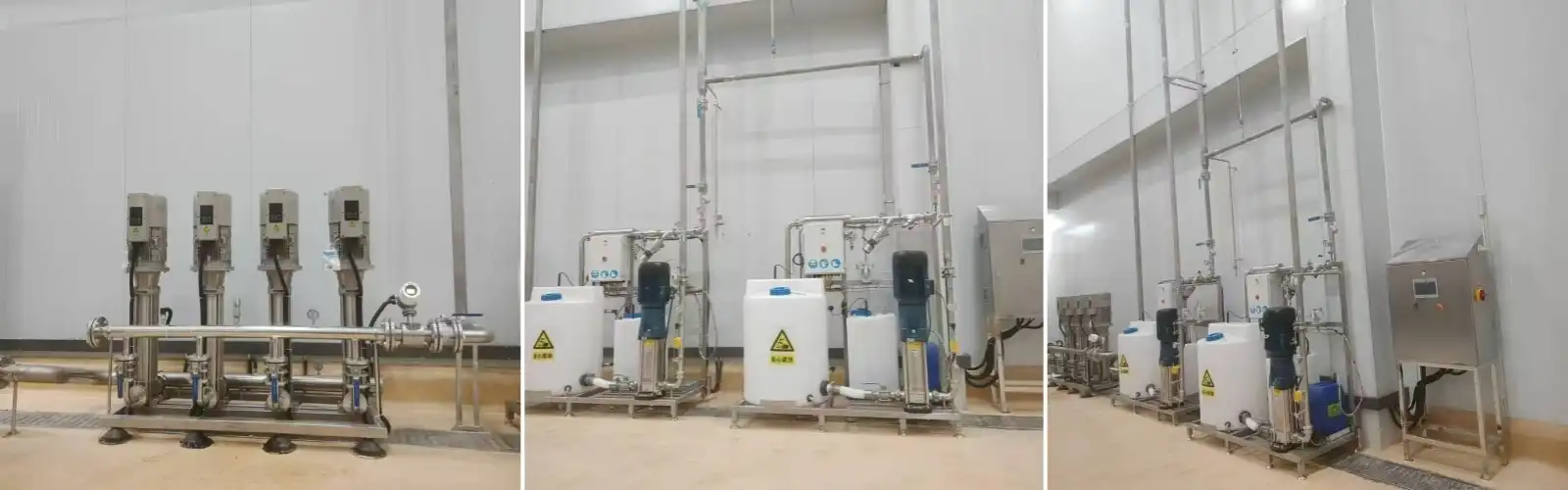
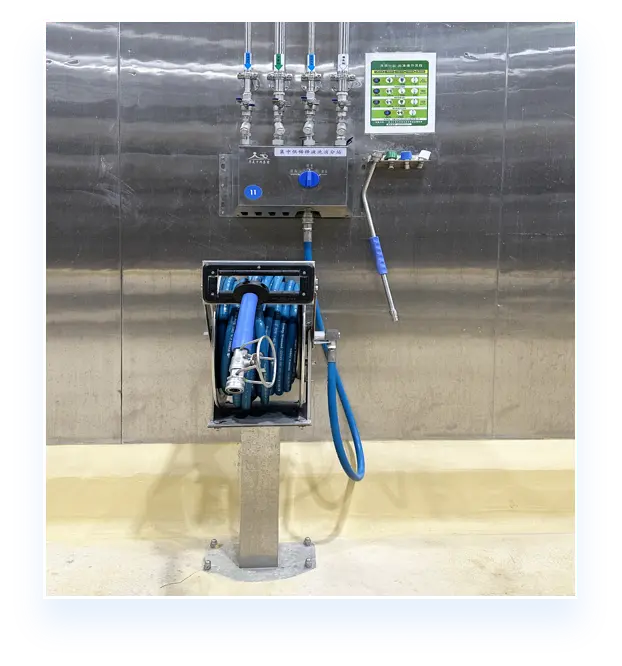
Through a network of substations, a multiline cleaning system sends high-pressure water, chemical agents, and compressed air all at the same time. Each outlet is its own three-function station that provides all three media at the point of use. This design gets rid of the need to mix by hand and lets multiple work areas work at the same time without stopping.
Core Components You Should Know
Standard systems include a tri-function station, auto-retract hose reel, food-grade high pressure hose, ergonomic spray cannon with pressure control and small-aperture nozzles to reduce water volume while maintaining cleaning power. A chemical dosing system automatically adjusts the ratios for all three cleaning phases, rinsing, foam application and spray disinfection.
Where These Systems Are Used
Big slaughterhouses, fish processing plants, central restaurants, and pharmaceutical production rooms typically have washdown systems that work in parallel. In a slaughterhouse that has four or more cutting lines running at the same time, each line must have its own method of controlling pressure and delivering chemicals. It is far easier to control a single-source system that coordinates all zones through PLC-based logic and SCADA tracking than it is to control separate tools in each zone.
Why Pressure Matters: Principles of Choosing the Right Cleaning Pressure
The Direct Link Between Pressure and Cleaning Results
It's not just force that makes pressure. It checks to see if the foam stays on long enough to break down organic matter, if the rinse cycle gets rid of loose dirt, and if the disinfectant spray can reach areas that are hard to reach. According to data from the USDA's Food Safety and Inspection Service, one of the main reasons why surfaces get contaminated again after disinfection is that they are not cleaned well enough.
Risks of Getting It Wrong
Systems that aren't under enough pressure leave behind fat, blood, and protein that shield bacteria from chemicals. Systems with too much pressure may damage surface coatings, force pollutants into gaps, and wear out hoses or nozzles. Both of these situations make operating costs and compliance risks higher under the SSOP and HACCP systems.
Key Factors That Drive Your Pressure Decision
Every pressure standard should be based on four factors:
- Residue type: Fat and coagulated protein require higher initial pressure (typically 60–80 bar) during rinse; foam stages often drop to 20–40 bar to allow dwell time.
- Surface material: Stainless steel conveyor lines tolerate high pressure well with a multi-line cleaning system; painted steel or softer alloys need lower settings to avoid surface degradation.
- System design: Multi-zone systems with independent zone controls allow each substation to run at a different pressure, which is critical for facilities with mixed surface types.
- Regulatory alignment: SSOP documentation must specify pressure ranges per zone, and those ranges must be reproducible and auditable.
These four parameters interact with each other, and none of them should be utilised as an isolated decision point. For example, an abattoir that works with both beef and poultry on parallel lines would need distinct pressure profiles on each zone, owing to the difference in residues and surface materials.
Comparing Multi-Line Cleaning Pressure Options and Systems
Fixed Pressure vs. Adjustable Pressure Configurations
While fixed-pressure systems are easier to keep up and cost less up front, they can't change to different cleaning stages or the needs of each zone. An adjustable-pressure parallel washdown system, on the other hand, enables operators drop the pressure during the foam dwell phase and increase it during the final rinse. This makes the cleaning better and consumes less water.
Multi-Line vs. Single-Line Architecture
Single-line systems can only serve one zone at a time and need to be scheduled in a certain order, which slows down production in factories with four or more busy processing lines. A parallel washdown setup lets all zones work at the same time, which cuts down on the total time needed to clean each shift. In a slaughterhouse with 10 lines, this difference can add one hour of work every day.
Cost-Benefit Dynamics of Pressure Control
Managing pressure accurately lowers chemical waste, increases hose service life, and lowers pump wear. When a business buys an adjustable multi-zone system, it usually makes back the extra cost within 18 to 24 months by saving money on maintenance and replacement parts. Systems that use small-aperture nozzle technology also use less water than systems that use regular nozzle designs.
How to Procure the Right Multi-Line Cleaning System for Your Needs
Match System Specifications to Your Floor Plan
Before you ask for a price, you should make a map of your facility's washing points. This will help you figure out which zones work at the same time and what kinds of surfaces are in each zone. If your provider sells fixed-size packages, you won't have as much freedom as if they offer endless substation scaling based on your real washing point count.
Evaluate Certifications and Compliance Readiness
Procurement teams must ensure that any equipment in a multi-line cleaning system that they acquire is CE-certified, and that any cleaning chemicals they use are REACH compliant. ISO 9001 quality control documentation allows for the tracking of a unit from raw materials through to completion. For food-grade manufacturing requirements and Halal/Kosher certifications, the customer must produce relevant paperwork before the transaction is done. For export orders to EU, FDA-regulated, or Saudi SFDA markets, the buyer must present compliance papers particular to the area.
After-Sales Support and Lead Time
Supply chain lead time is a tough problem for places where engineering work needs to be done every 8–16 weeks. Ships immediately with standard configurations, and custom multi-zone configurations that work with both PLCs and SCADAs will be available in 14 business days. Be sure the provider offers remote and on-site installation assistance, especially if it is your first time installing a system.
Best Practices and Safety Guidelines for Operating Multi-Line Cleaning Systems
Pressure Safety Protocols Every Operator Must Follow
No matter what part of the center, operators should never go over the recommended pressure range. Before every shift, all of the hose connections have to be checked. Every month, you should check the pressure release valves. During active cleaning cycles, workers must wear protective gear like face shields, chemical-resistant gloves, and waterproof aprons. These steps are not optional; OSHA 29 CFR 1910.303 and standard SSOP documentation say they need to be taken.
Maintenance Strategies That Prevent Downtime
Maintenance is what keeps the performance of pressure stable over time. The most useful schedule has these things on it:
- Weekly: Inspect nozzle apertures for clogging or wear; flush dosing lines after each shift.
- Monthly: Test pressure calibration at each substation against the documented SSOP specification; inspect hose reels for cable fatigue.
- Quarterly: Full pump inspection, valve seat check, and chemical ratio verification across all dosing units.
Consistently sticking to this plan stops the kind of slow pressure drift that leads to compliance failures during third-party checks.
Operator Training Requirements
Trained operators are the last line of defence against pressure-related accidents. All those responsible for cleaning should receive equipment-specific training on how to adjust pressure, handle chemicals, shut down the system in an emergency, and maintain SSOP compliance logs. Suppliers who provide on-site training during installation significantly reduce ramp-up time and operating mistakes in the first 90 days.
Conclusion
Pressure selection is not a default setting; it is a choice made by engineers that impacts how well equipment cleans, how long it lasts, how well it meets regulations, and how much it costs to run. The right multi-line cleaning system gives your facility control over its own zones, pressure that is adjustable over all substations, and a recorded setup that can pass SSOP and HACCP checks. Make sure the system will fit your floor plan, check the certifications of the provider, and pay for user training upfront. These three steps will define how well your washdown infrastructure performs in the long run.
FAQ
1. What pressure range is appropriate for slaughterhouse cleaning?
Most slaughterhouse applications run between 40 and 80 bar during the rinse and foam stages, depending on residue type and surface material. The Homey Wonbond multi-line cleaning system supports 15–100 bar, fully adjustable per zone.
2. How often should pressure settings be reviewed?
Pressure calibration should be verified monthly against your SSOP documentation. Any equipment change, chemical switch, or facility expansion warrants an immediate recalibration.
3. Can different substations run at different pressures simultaneously?
Yes. A properly configured parallel washdown system allows each zone to operate independently. This is a standard requirement for facilities running four or more processing lines at the same time.
Get a Pressure Configuration That Fits Your Facility — Contact Homey Wonbond
Since 2011, Homey Wonbond has helped big food processing and slaughterhouses with their multi-line cleaning systems. We are a reliable company that sells multi-line cleaning systems. Our products are CE-certified, our chemicals are REACH-compliant, and we offer full PLC/SCADA connection support. Within 14 business days, custom versions are shipped. You can email our technical team at frank@hmwbcleaning.com or go to hmwbcleaning.com to get a pressure specification consultation or a quote that is tailored to your facility.
References
1. USDA Food Safety and Inspection Service. SSOP Guidelines for Meat and Poultry Processing Establishments. 2017.
2. Lelieveld, H. L. M., Mostert, M. A., & Holah, J. (Eds.). Handbook of Hygiene Control in the Food Industry. Woodhead Publishing, 2005.
3. Troller, J. A. Sanitation in Food Processing. Academic Press, 2012.
4. European Hygienic Engineering & Design Group (EHEDG). Hygienic Design Principles for Food Processing Equipment. EHEDG Guidelines, 2018.
5. OSHA. 29 CFR 1910 — Occupational Safety and Health Standards for General Industry. U.S. Department of Labor, 2019.
6. Sprenger, R. A. Hygiene for Management: A Text for Food Hygiene Courses. Highfield Publications, 2017.
Learn about our latest products and discounts through SMS or email