- English
- French
- German
- Portuguese
- Spanish
- Russian
- Japanese
- Korean
- Arabic
- Greek
- German
- Turkish
- Italian
- Danish
- Romanian
- Indonesian
- Czech
- Afrikaans
- Swedish
- Polish
- Basque
- Catalan
- Esperanto
- Hindi
- Lao
- Albanian
- Amharic
- Armenian
- Azerbaijani
- Belarusian
- Bengali
- Bosnian
- Bulgarian
- Cebuano
- Chichewa
- Corsican
- Croatian
- Dutch
- Estonian
- Filipino
- Finnish
- Frisian
- Galician
- Georgian
- Gujarati
- Haitian
- Hausa
- Hawaiian
- Hebrew
- Hmong
- Hungarian
- Icelandic
- Igbo
- Javanese
- Kannada
- Kazakh
- Khmer
- Kurdish
- Kyrgyz
- Latin
- Latvian
- Lithuanian
- Luxembou..
- Macedonian
- Malagasy
- Malay
- Malayalam
- Maltese
- Maori
- Marathi
- Mongolian
- Burmese
- Nepali
- Norwegian
- Pashto
- Persian
- Punjabi
- Serbian
- Sesotho
- Sinhala
- Slovak
- Slovenian
- Somali
- Samoan
- Scots Gaelic
- Shona
- Sindhi
- Sundanese
- Swahili
- Tajik
- Tamil
- Telugu
- Thai
- Ukrainian
- Urdu
- Uzbek
- Vietnamese
- Welsh
- Xhosa
- Yiddish
- Yoruba
- Zulu
Stainless Steel Cleaning Machine: Everything You Need to Know
Stainless steel cleaning machines are specialised industrial cleaning systems used to clean food-contact surfaces and processing equipment, by removing pollutants such as grease, protein residue, biofilms and oxidation. These machines bring repeatable cleaning cycles with regulated pressure to dairy factories, beverage lines and breweries, replacing slow and inconsistent hand scrubbing, where hygiene compliance is directly linked to product safety. Whether running a 10-person shift or a full production floor, the proper stainless steel cleaning machine cuts downtime, offers CIP integration and keeps your facility audit-ready.
Understanding Stainless Steel Cleaning Machines
What They Are and How They Work
Stainless steel surfaces are cleaned using a cleaning equipment that applies regulated levels of pressure, heat and chemical to the surface of dirt without damaging the underlying material. The most common method in food-grade environments is high-pressure spray impingement. It usually works at 30 to 80 bar. The cleaning cycle gets dirt off of surfaces faster than immersion or wiping by hand, and the process can be done exactly the same way every shift, which is something that can't be done by hand.
Types Available on the Market
There are generally three categories of industrial cleaning equipment: portable high-pressure cleaners, fixed CIP (Clean-In-Place) skid systems and semi-automated foam stations. Mobile tools allow you to work in many different places. Fixed CIP systems work well with closed-loop pipework in liquor or dairy lines. Before washing, foam stations use dwell-time cleansers. A lot of places use all three to cover all types of surfaces and zones.
Key Components Worth Evaluating
In real life, performance depends on the pump assembly, nozzle configuration, hose length, and valve construction. In places where food is processed, the surfaces that come into contact with the food must be made of SUS 316L stainless steel, and the valve bodies must have 3-A sanitary certification or something similar. A frame that is soldered together and has threaded anti-loosening joints will last longer and have fewer leak spots, which are important when the equipment works two or three shifts a day.
Benefits and Applications of Stainless Steel Cleaning Machines
Operational and Cost Advantages
The most obvious gain is less work. With a high-pressure cleaning machine, one person can clean in 20 minutes what it takes a crew of people over an hour to do by hand. The process is also consistent in terms of speed; the pressure, temperature, and chemical concentration are all kept within certain limits during each cycle. Industry data shows that when facilities move from cleaning by hand to pressure-based systems, they save 30–40% of water per shift, which directly lowers their energy costs.
These are the main benefits this kind of equipment brings to a production setting:
- Reduced cleaning time per cycle: High pressure water at 50 bar breaks down protein coatings and grease far quicker than any sponge or brush could hope to manage, reducing average cleaning windows by as much as 50%.
- Lower chemical consumption: The stainless steel cleaning machine's targeted spray patterns focus the detergent where it is needed, decreasing product waste and limiting the worker's chemical exposure throughout everyday operations.
- CIP compatibility: Units designed with sanitary fittings and hot-water tolerance (60–80°C) integrate directly into existing CIP circuits without additional engineering modifications.
- Regulatory readiness: Equipment built to 3-A or EHEDG hygienic design standards supports FDA and EU food safety audits, reducing compliance risk across export markets.
These benefits directly ease the stress that plant managers feel during audit season or when a line needs to be turned around quickly between runs of production.
Maintenance and Safety Tips for Optimal Performance
Routine Checks That Prevent Downtime
The nozzles are worn out and the high pressure washers are usually leaking pressure. Operators should check the nozzle orifices on a regular basis and replace worn tips before the pressure is below the target range. Monthly inspection of hose condition including couplings and inner liner. Clean filter elements in the entry to the pump every 40 to 80 hours of use, or sooner if your water source is rich in sediment. These tests don't take long—less than 15 minutes—and they stop most unplanned stoppage.
Handling Chemicals Safely
Food-grade disinfectants and soaps should be stored in marked and sealed containers away from the heat sources. Flush the line with clean water before priming the foam system or changing the cleaning agents to avoid the mixing of chemicals. When working concentrates, operators should wear gloves that can handle chemicals and eye protection. Cleaning products that follow REACH rules have lower risks than older versions, but personal protective equipment (PPE) rules are still needed no matter what drug it is.
Knowing When to Call for Service
If the pressure changes even after installing a new nozzle, it may be time to replace the pump seals or the unloader valve. When motor starts up unusual noises. If so, it could be that the bearings are wearing out. The most reliable providers, such as Homey Wonbond, provide 24/7 online technical support. This lets most problems be fixed without having to wait for an on-site visit.
How to Choose the Right Stainless Steel Cleaning Machine for Your Business
Match Specifications to Your Production Environment
Start with the pressure and length of the hose. With a 25-meter hose, you can reach most medium-sized manufacturing floors without moving. If your organization has various zones or cold storage locations a mobile box with quick connect valves will be a time saving when moving goods around. Ensure that the machine can control water circulation between 60°C and 80°C for dairy and beverage lines. This is important for CIP compatibility and fat reduction.
Certification Documents You Need Before Purchasing
If a facility wants to export a stainless steel cleaning machine, the procurement team needs to check that the product has CE certification for EU markets and ask for 3-A sanitary standard documentation if FDA compliance is part of their quality program. Audits of suppliers are supported by output certificates that are ISO 9001 from the maker. If the market you're going to needs to be SFDA or Halal-compliant, make sure you know from your supplier which documents they can give you and which ones you need to get on your own before you place the order.
Evaluating Supplier Reliability
Long-term partners are differentiated by good after-sales service from the average provider. Find out if spare parts are available, what the normal lead time for new valves is, and whether the offer includes expert training. A vendor with 18 years or more of production experience and a history of dealing with research institutions usually provides less supply-chain risk than a newbie. Another evidence of genuine production depth instead of merely selling is the flexibility to customize, such as by adding longer hoses or changing the frames.
Top Stainless Steel Cleaning Machine Brands and Suppliers
Homey Wonbond — Enterprise-Grade Sanitation Equipment
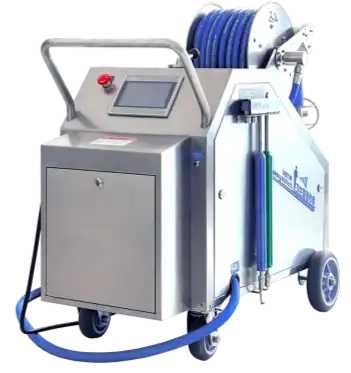
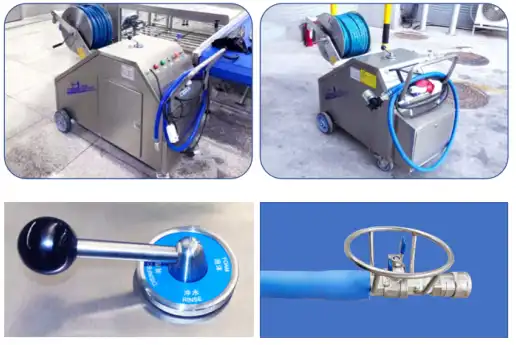
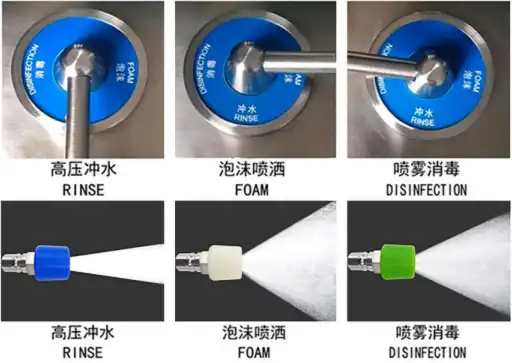
The patented stainless steel cleaning machine model with patent number ZL201822250Q21 is made by Homey Wonbond (Huamei Wanbang Biotechnology Group, founded in 2011).X. Power comes from 380V/3kW, and the unit works with 3–5 bar air pressure and 50 bar washing pressure. The standard hose is 25 meters long, but a 30-meter version is available for bigger buildings. The machine body is 1,250 mm long, 450 mm wide, and 1,040 mm high. It weighs 148 kg. It has a 3-in-1 valve system that lets you switch between high-pressure cleaning, foam application, and sanitizer spraying without stopping the work. There are CE, ISO 9001, and REACH-compliant cleaning agents that come with the machine, and it ships from stock. Custom setups can be ready in 14 working days.
Homey Wonbond may combine instruments with chemical systems that complement each other, such as alkaline CIP cleansers, acid descalers and food-grade disinfectants, all through one supply connection. This way of working reduces the time to interact with vendors and ensures chemicals and equipment are compatible – particularly crucial when dealing with audit documents.
What to Look for in Any Supplier
A reliable company that sells stainless steel cleaning machines should have full technical datasheets, traceable material certifications for parts that get wet, and a clear service agreement for after the sale. Check that the seller has current ISO approval and can produce CE paperwork if necessary. One of the most direct influences on long term operating costs is the ease of availability of original spare parts, especially pump seals, nozzle sets and valve cartridges.
Conclusion
If a facility wants to export a stainless steel cleaning machine, the procurement team needs to check that the product has CE certification for EU markets and ask for 3-A sanitary standard documentation if FDA compliance is part of their quality program. Audits of suppliers are supported by output certificates that are ISO 9001 from the maker. If the market you're going to needs to be SFDA or Halal-compliant, make sure you know from your supplier which documents they can give you and which ones you need to get on your own before you place the order.
FAQ
1. How often should the nozzle and hose be inspected?
Every week, you should check the nozzles for damage or blockages. Every month, you should check all of your hoses and connections. Most problems with pressure loss are caused by worn nozzles, which are easy and cheap to fix if found early.
2. Is this machine compatible with CIP hot-water cycles?
Yes. The machine works with regular CIP circuits in dairy and beverage processing lines since it can manage water temperatures between 60°C and 80°C.
3. What certifications come with the machine?
The machine has the CE mark and it is manufactured according to the norms of the ISO 9001 quality management system. ZL201822250Q21 Patent number: ZL201822250Q21.X. You may need to request separate 3-A paperwork and additional compliance files for food safety inspections by the FDA or EU.
Contact Homey Wonbond for Your Next Stainless Steel Cleaning Machine Order
Homey Wonbond sells stainless steel cleaning machine tools made of food-grade stainless steel that are designed to work in dairy, beverage, and food processing areas. With 18 years of production experience, CE approval, and 14-day custom delivery, we can help you with the whole buying process, from making the specifications to installing the goods. You can email our technical team at frank@hmwbcleaning.com or go to hmwbcleaning.com to get a price or product information from a reputable company that makes stainless steel cleaning machines.
References
1. 3-A Sanitary Standards, Inc. — 3-A Sanitary Standards and Accepted Practices, 2022.
2. European Hygienic Engineering & Design Group (EHEDG) — EHEDG Guidelines: Hygienic Design of Equipment for Open Processing, 2021.
3. U.S. Food and Drug Administration — Current Good Manufacturing Practice in Manufacturing, Packing, or Holding Human Food (21 CFR Part 110), 2023.
4. International Organization for Standardization — ISO 9001:2015 Quality Management Systems — Requirements, 2015.
5. Lelieveld, H.L.M., Mostert, M.A., & Holah, J. — Handbook of Hygiene Control in the Food Industry, Woodhead Publishing, 2016.
6. European Chemicals Agency (ECHA) — REACH Regulation (EC) No 1907/2006: Understanding REACH, 2022.
Learn about our latest products and discounts through SMS or email