- English
- French
- German
- Portuguese
- Spanish
- Russian
- Japanese
- Korean
- Arabic
- Greek
- German
- Turkish
- Italian
- Danish
- Romanian
- Indonesian
- Czech
- Afrikaans
- Swedish
- Polish
- Basque
- Catalan
- Esperanto
- Hindi
- Lao
- Albanian
- Amharic
- Armenian
- Azerbaijani
- Belarusian
- Bengali
- Bosnian
- Bulgarian
- Cebuano
- Chichewa
- Corsican
- Croatian
- Dutch
- Estonian
- Filipino
- Finnish
- Frisian
- Galician
- Georgian
- Gujarati
- Haitian
- Hausa
- Hawaiian
- Hebrew
- Hmong
- Hungarian
- Icelandic
- Igbo
- Javanese
- Kannada
- Kazakh
- Khmer
- Kurdish
- Kyrgyz
- Latin
- Latvian
- Lithuanian
- Luxembou..
- Macedonian
- Malagasy
- Malay
- Malayalam
- Maltese
- Maori
- Marathi
- Mongolian
- Burmese
- Nepali
- Norwegian
- Pashto
- Persian
- Punjabi
- Serbian
- Sesotho
- Sinhala
- Slovak
- Slovenian
- Somali
- Samoan
- Scots Gaelic
- Shona
- Sindhi
- Sundanese
- Swahili
- Tajik
- Tamil
- Telugu
- Thai
- Ukrainian
- Urdu
- Uzbek
- Vietnamese
- Welsh
- Xhosa
- Yiddish
- Yoruba
- Zulu
Foam Spray Unit: A Complete Guide to Industrial Foam Cleaning
A foam spray unit is a pneumatic cleaning appliance that produces thick, adhering foam for faster and more effective disinfection of vast surface areas than human scrubbing. One foam spray equipment allows one operator to cover hundreds of square meters every shift in food processing firms, slaughterhouses and central kitchens. This presentation will cover how these systems operate, how to pick the right system and what to look for when choosing a supplier of foam spray units that comply with HACCP, CE and REACH standards.
Understanding Foam Spray Units: Technology and Applications
How a Foam Spray Unit Generates Cleaning Foam
A pneumatic foam spray machine is a device that employs compressed air, water and a concentrated foamy cleaning in a nozzle. The foam lasts a certain time and has a certain density, depending on the ratio of air to liquid. Thicker foam adheres to vertical surfaces for longer, allowing more time for active chemicals to breakdown biofilms, lipids and proteins. This is exactly the problem that happens in places like meat processing and poultry.
Foam vs. Traditional Water Spray
When compared to straight water spray, studies on food plant cleaning have shown that high-cling foam can cut the amount of rinse water used by up to 30–50%. Detergent cannot remain on a sloped stainless steel surface long enough to breakdown grease with merely water. This problem can be handled with a foam spray machine, where the cleaner is suspended in a stable foam matrix, increasing the stay time without using more chemicals.
Key Industrial Applications
The foam spray unit is used in a number of work areas where cleanliness is essential:
- Meat and poultry processing: Cleans up blood, fat and protein residues between shifts to assist with daily HACCP audit requirements.
- Central kitchens: Cleans cooking equipment surfaces, tile walls, and floors without disassembly.
- Seafood facilities: Displaces fish oils and organic residue from conveyor lines and chilled processing tables.
- Livestock housing: Provides full-surface disinfectant coverage on walls and ceilings in biosecurity-critical environments.
All of these usage need the same features . Uniform foam supply . Movement of operator . Chemical compatibility to surfaces that come in contact with food .
Types and Features of Foam Spray Units: Choosing the Right Solution
Portable vs. Fixed Installation
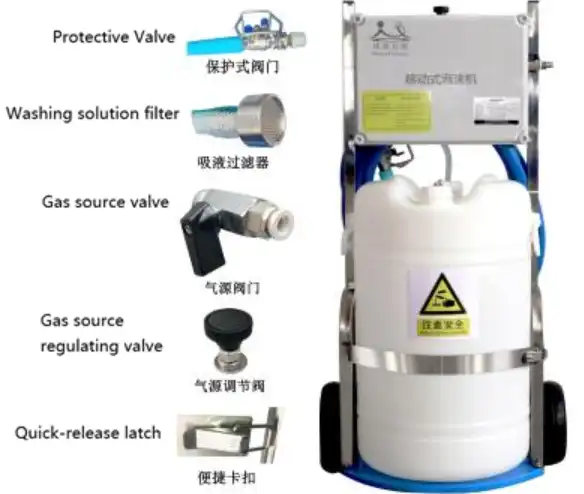
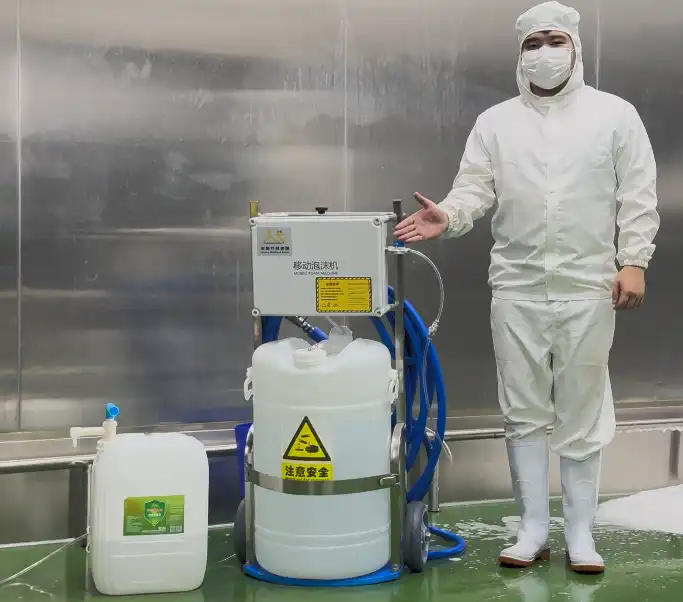
A portable foam spray machine with wheels weighs around 28 kg and may be connected to any source of compressed air. Fixed systems are good for fixed wash-down stations in large buildings but require retrofitting to piping and are more expensive. Most medium-sized slaughterhouses and central kitchens choose a portable compressed-air type since it allows them greater freedom and higher production.
Core Components That Affect Performance
The durable foam spray unit includes three working pieces at any time. The proportioner adds the detergent to the water stream in a precise dilution ratio. The foam thickness and projection are determined by the nozzle, which is approximately 8 mm wide. Chemical compatibility depends on the hose material. Food-grade hoses don't let flavours escape or surfaces get soiled during rinsing. One worker can work throughout a wide processing bay with a 15-meter food-grade hose without needing to reposition the equipment.
Safety and Compliance Features
Electrical equipment is a serious threat when killing animals in moist environments. The spray zone of a compressed-air foam spray machine has no electrical parts and therefore no chance of getting shocked. The CE certification means the unit fulfils European safety standards for machinery, and REACH compliance means chemical exposure is within the limits specified by the EU. Facilities applying for HACCP approval should ensure that any provider of foam spray units provides them with evidence that the materials used are food safe.
How to Select the Best Foam Spray Unit for Your Industrial Needs
Match Capacity to Your Facility Size
The first number to look at is the output rate. It only takes one pass for a 190 L/min foam spray machine to cover a typical slaughter bay. With a projection distance of 3–5 m, one operator can work on high walls and ceiling joints without needs to use ladders.
Evaluate Total Cost of Ownership
The purchase price is only one part of the estimate. Smaller units below 80 L/min are fine for central cooking prep areas but not for covering the whole slaughterhouse floor. When considering foam spray unit providers, think about the following:
- Air consumption: The unit requires 190 L/min at 0.8 MPa. Verify your compressor can sustain this without pressure drops.
- Chemical compatibility: Using the wrong foaming agent damages seals and reduces foam quality. A supplier offering matched cleaning chemicals eliminates guesswork.
- Spare parts availability: Nozzles, diaphragms, and O-rings wear out. Confirm the supplier holds stock and can ship within 48 hours.
- Customization lead time: Standard units ship immediately; custom configurations take approximately 14 working days.
When you match the foam spray unit to your actual air supply and chemical program, the most common operational problems are stopped before they happen.
Procurement Options and Supplier Reliability
Most medium-sized businesses that process meat buy their equipment instead of renting it. When you buy two or more foam spray units at once, you can usually get factory prices and consolidated freight. When looking at a foam spray unit maker, make sure to ask for proof of ISO 9001 certification, CE test results, and names of users in your business.
Installation, Operation, and Maintenance Best Practices
Step-by-Step Installation
The maximum operating pressure of the compressed air line is determined to be 0.8 MPa. Connect the compressed air line to the input port. Set the device on a dry flat surface about 15 meters from the destination point. Fill the soap tank with a foaming agent that is food safe at the same flow rate as the tip. Before starting the cleaning cycle, test spray for 30 seconds away from surfaces that may contact food to eliminate any air pockets and check the consistency of the foam.
Daily Operation Protocol
When the device is in operation, keep air pressure on the foam spray unit so that density of the foam is uniform. Eye protection, rubber gloves and a waterproof apron must be used by operators. To get optimum foam retention spray tall things at 45 degree angle. If you use anything, leave it on for 5 to 10 minutes and rinse it off. Maintain HACCP audit records for each cleaning cycle.
Preventive Maintenance Schedule
Regular repair on the foam spray unit makes sure it works well during all shifts:
- Daily: Flush the hose and nozzle with clean water after use. Inspect O-rings for cracking or chemical swelling.
- Weekly: Check the proportioner metering tip for scale buildup. Wipe down the exterior chassis with a damp cloth.
- Monthly: Test air inlet filters, inspect pump diaphragms, and confirm hose fittings show no micro-cracks.
Regular preventive maintenance cuts down on unplanned downtime and makes your foam spray unit last much longer than the normal three-year run.
Environmental Impact and Safety Considerations
Water and Chemical Efficiency
Cleaning agents are delivered in a concentrated, low-volume carrier by foam technology. This means that for every square meter cleaned, less rinse water goes into the drains. In places with strict rules about sewer release, lowering the amount of effluent directly lowers the costs of following the rules. Using biodegradable foaming agents lowers the biological oxygen demand (BOD) load in plant wastewater even more. This is a measured environmental benefit that has been shown in audits of food plants that are committed to sustainability.
Operator Safety and Regulatory Compliance
A foam spray machine utilises compressed air and eliminates the electrical hazards of motor-driven pressure washers in damp environments. The chemicals used must be food grade and have current Safety Data Sheets (SDS). Operators should be trained to write on dilution ratios, safety equipment requirements and emergency rinses. Facilities that are compliant with HACCP, FDA or EU food safety regulations will need to ensure they have the latest compliance documents before purchasing the foam spray machine and associated detergents.
Disposal and Regulatory Awareness
Local environmental rules say that used washing agents and rinse water must be thrown away. ISO 9001-certified suppliers usually include SDS documents and instructions on how to properly dispose of products in the package. This makes it easier for site managers to meet legal requirements when they report things.
Conclusion
One of the best purchases a food processing plant can make to replace hand washing, cut down on water use, and keep up with HACCP standards is a pneumatic foam spray unit. To pick the right unit, you need to make sure that the foam output, projection distance, and chemical compatibility all work with the environment where you will be making the product. The 190 L/min compressed-air foam spray unit from Homey Wonbond meets the needs of slaughterhouses and central kitchens by having full customization options, confirmed CE and REACH certification, and quick customer service after the sale. If your building is ready to stop cleaning by hand, getting the right foam spray unit is the easy way to go.
FAQ
1. Does a foam spray unit require electrical power?
No. This compressed-air foam spray unit runs entirely on pneumatic energy at 190 L/min and 0.8 MPa. There are no electrical components in the spray zone, making it safer for wet processing environments where water and electricity present serious risks.
2. Is a foam spray unit suitable for HACCP-audited facilities?
Yes, provided the unit is constructed from food-safe materials and paired with food-grade detergents. The CE-certified, REACH-compliant construction of the Homey Wonbond foam spray unit meets the material safety requirements auditors look for during HACCP inspections.
3. What is the difference between a portable and fixed foam spray unit?
A portable foam spray unit connects to a compressed-air supply and moves with the operator, covering multiple zones in one shift. A fixed unit mounts permanently at a single wash station and suits high-volume facilities with dedicated cleaning areas. Portable models are recommended when cleaning needs span multiple bays or shift patterns change frequently.
Get Your Foam Spray Unit from Homey Wonbond Today
Homey Wonbond sells foam spray units that are CE-certified and REACH-compliant. These units are made for use in central kitchens, meat processing facilities, and food manufacturing facilities. We are a direct foam spray unit manufacturer with 18 years of experience. We offer factory prices, fast delivery, and technical support 24 hours a day, 7 days a week. Get in touch with us to talk about your facility needs or to ask for a bulk quote. You can email our team at frank@hmwbcleaning.com or go to hmwbcleaning.com to see all of our products.
References
1. Lelieveld, H. L. M., Mostert, M. A., & Holah, J. (Eds.). (2005). Handbook of Hygiene Control in the Food Industry. Woodhead Publishing.
2. Marriott, N. G., Schilling, M. W., & Gravani, R. B. (2018). Principles of Food Sanitation (6th ed.). Springer.
3. U.S. Food and Drug Administration. (2022). Food Safety Modernization Act: Preventive Controls for Human Food. FDA.
4. Codex Alimentarius Commission. (2020). General Principles of Food Hygiene (CXC 1-1969, Rev. 2020). FAO/WHO.
5. European Chemicals Agency. (2023). REACH Regulation: Understanding REACH. ECHA.
6. International Organization for Standardization. (2015). ISO 9001:2015 — Quality Management Systems: Requirements. ISO.
Learn about our latest products and discounts through SMS or email