- English
- French
- German
- Portuguese
- Spanish
- Russian
- Japanese
- Korean
- Arabic
- Greek
- German
- Turkish
- Italian
- Danish
- Romanian
- Indonesian
- Czech
- Afrikaans
- Swedish
- Polish
- Basque
- Catalan
- Esperanto
- Hindi
- Lao
- Albanian
- Amharic
- Armenian
- Azerbaijani
- Belarusian
- Bengali
- Bosnian
- Bulgarian
- Cebuano
- Chichewa
- Corsican
- Croatian
- Dutch
- Estonian
- Filipino
- Finnish
- Frisian
- Galician
- Georgian
- Gujarati
- Haitian
- Hausa
- Hawaiian
- Hebrew
- Hmong
- Hungarian
- Icelandic
- Igbo
- Javanese
- Kannada
- Kazakh
- Khmer
- Kurdish
- Kyrgyz
- Latin
- Latvian
- Lithuanian
- Luxembou..
- Macedonian
- Malagasy
- Malay
- Malayalam
- Maltese
- Maori
- Marathi
- Mongolian
- Burmese
- Nepali
- Norwegian
- Pashto
- Persian
- Punjabi
- Serbian
- Sesotho
- Sinhala
- Slovak
- Slovenian
- Somali
- Samoan
- Scots Gaelic
- Shona
- Sindhi
- Sundanese
- Swahili
- Tajik
- Tamil
- Telugu
- Thai
- Ukrainian
- Urdu
- Uzbek
- Vietnamese
- Welsh
- Xhosa
- Yiddish
- Yoruba
- Zulu
Meat Stuffer Washer: A Complete Guide to Hygienic Cleaning
Meat Stuffer Washer is an industrial cleaning system especially designed for the preparation of sausage and ham equipment. A purpose-built meat stuffer washer, unlike the standard pressure washer, can go inside hydraulic stuffers and vacuum stuffers, and into twisting machinery where protein residues and fat deposits lie between shifts. These zones need to be maintained to reduce the risk of cross-contamination, to ensure ISO 22000 and FSSC 22000 audit preparedness, and to safeguard the long-term performance of your filling process. If you are a plant supervisor, or an equipment vendor, this book will tell you everything you need to know before you buy.
Understanding Meat Stuffer Washers and Their Cleaning Requirements
What Makes a Meat Stuffer Washer Different
Most facilities begin with a standard high pressure hose but rapidly find that it won't reach inside the stuffer cylinder or the tight diameter of the stuffing horn. A special washer for banger equipment is fashioned for meat-filling machines. The nozzle profiles, hose diameter and pressure rating are tuned to remove fat and protein build-up from plungers, vanes and filling tubes without having to pull the whole unit apart for each manufacturing run.
Critical Contamination Points in Filling Equipment
The plunger seal area, the stuffing horn interior, and the transfer from hopper to cylinder are the three places that cleanliness swab tests always fail. Listeria monocytogenes and Salmonella may survive for days in protein-rich leftovers that aren’t washed properly, the USDA Food Safety and Inspection Service says. But to get to those spots you need enough pressure and the correct spray pattern to do the job, and a typical garden hose doesn't deliver either.
Who Needs a Dedicated Cleaning System
A special ham stuffer cleaning system is helpful for sausage or ham plants with 30 to 100 workers, two or more shifts, or foreign markets that require third-party audits. When equipment wholesalers group cleaning machines with hydraulic stuffers, twisters, and smokehouses, they get a more valuable package that answers buyers' concerns before they even happen.
Best Practices for Cleaning and Maintaining Your Meat Stuffer Washer
Recommended Cleaning Frequency
Heavy-duty lines that handle both pork and chicken during the same shift need to have all of their parts cleaned every time the products change, not just at the end of the day. For facilities that only make one species, a thorough sausage machine rinse can be done at the end of each production shift. The main rule is that there shouldn't be any organic waste on surfaces that come into touch with other things overnight. This is because biofilm formation speeds up a lot after six hours at room temperature.
Step-by-Step Cleaning Protocol
An easy-to-follow plan keeps food safe and tools working for a long time. This is a tried-and-true order that ISO 22000-certified plants follow:
- Pre-rinse (cold water, 2–3 minutes): Before applying any chemical, remove loose meat particles from all exposed surfaces. Cold water hinders denaturing of protein and subsequent attachment to metal.
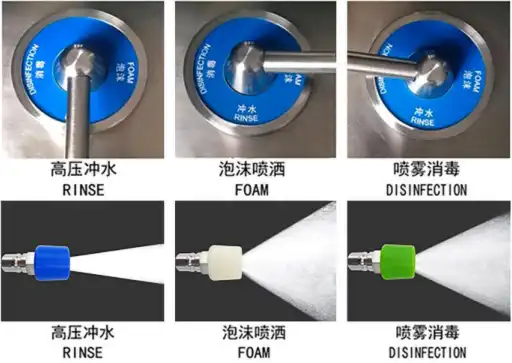
- Foam detergent application (5–10 minutes contact time): Apply an alkaline foam cleaner at the correct dilution. The foam clings to vertical surfaces and penetrates grease layers that water alone cannot shift.
- High-pressure rinse (35 bar, full hose sweep): Use the meat stuffer washer at full pressure to dislodge softened deposits from internal channels and stuffing horns.
- Disinfection stage: Switch the 3-in-1 valve to disinfectant mode and coat all food-contact surfaces. Allow the required dwell time before the final rinse.
- Inspection and air-dry: Check nozzle outlets and hose connections; allow surfaces to air-dry before the next production run.
If you follow this order, the number of microbes will always stay below the allowed limits, and seals and cylinders will last longer.
Routine Equipment Maintenance
After you have cleaned, inspect the spray tips for wear and all quick-connect joints for leaks. Refer to the manufacturer's recommendations for greasing valve stems. A maintenance journal will not only satisfy the auditor's requirement for written records of preventive maintenance, but will also help to discover wear and tear before it causes unplanned downtime.
Comparing Meat Stuffer Washer Solutions for Different Business Needs
Manual Cleaning vs. Dedicated Pressure Washing
Scrubbing by hand with buckets and brushes takes a lot of time, is hard on the body, and isn't always accurate. According to a study in the Journal of Food Protection, cleaning meat processing equipment by hand left contamination in over 30% of the samples that were tested. This was in contrast to the much lower rates of contamination that were found when mechanical pressure washing was used. A dedicated meat stuffer washer gets to places that brushes can't reach and gets rid of operator-to-operator variation.
Electric vs. Manual Washers
Electric pressure washers give you the same amount of work over the course of a shift, which is helpful when your team has to clean a lot of stuffers and mixers at once. Manual pump washers wear out workers, and as the shift goes on, the pressure drops. An electric unit is required for plants that are running at 35 bar or higher, which is the pressure needed to remove hard protein deposits from narrow stuffing horns. It is not a choice; it is the norm.
Commercial vs. Light-Duty Models
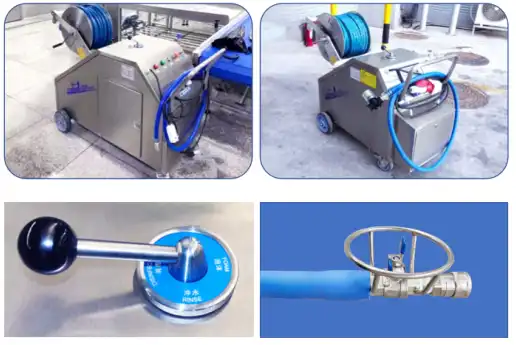
Retail butcher shops can buy light-duty washers that are rated for occasional, low-volume use. The Huamei Wanbang unit is a commercial-grade ham and sausage equipment washer with a 148 kg frame, patented welded construction (Patent No. ZL201822250Q21.X), and a 25-meter hose that can reach across multiple rooms without having to move the base unit. The 1450 × 520 × 1060 mm footprint fits through normal doorways, which solves the problem of limited access that floor bosses often bring up when equipment is being evaluated.
How to Select and Purchase the Right Meat Stuffer Washer for Your Business
Key Procurement Criteria
Before you ask any meat stuffer washer supplier for a price, you should make a list of four things: the working pressure that is needed, the size of the facility floor, the power supply requirements, and whether the unit needs to work with current foam dosing or central cleaning systems. The Huamei Wanbang meat stuffer washer works with 220V/1.5kW, 35 bar working pressure, and 3–5 bar air pressure. These are standard settings for most facilities in North America and other countries.
Evaluating Supplier Credibility
Certifications are a useful way to sort things out. When something has CE certification, it means that it meets European safety standards. The manufacturing process is controlled and can be tracked if the company has ISO 9001 quality management certification. EU REACH compliance on cleaning agent recipes proves that chemicals are safe for use around food. A company that makes meat stuffer washers with these credentials lowers the risk of not following the rules for plants that want to sell and have to go through EU, FDA, or Saudi SFDA audits.
Pricing, Lead Time, and Customization
Units with the standard setup are ready to ship. You can get customized setups within 14 business days. These could include changing the tip forms, adjusting the length of the hose up to 30 meters, or adapting the mounting frames. If a distributor buys a ham stuffer cleaning system together with stuffers, twisters, and smokehouses, it's easy to talk about bulk pricing.
Ensuring Compliance and Long-Term Hygiene Performance
Regulatory Requirements in Meat Processing
Both ISO 22000 and FSSC 22000 require cleaning and disinfecting procedures to be written down and have performance records that can be checked. Hazard Analysis and Critical Control Points (HACCP) framework calls equipment surfaces that come into touch with meat "critical control points." This means that if they are not cleaned properly, there is the biggest risk to food safety. Auditors would expect to see a trail of evidence including a sausage stuffing machine washer used as per written instructions, regular ATP swab testing.
Common Compliance Failures and How to Avoid Them
Three common audit findings at meat processing plants are related to cleaning equipment: disinfectants aren’t being in contact long enough, there isn’t enough pressure to flush out dead-end routes and no written cleaning plans. All three problems are fixed when employees follow a written standard operating procedure and use a meat stuffer machine that is right for the job. Attaching training records to the SOP closes documentation gaps that result in audit penalties.
Building a Preventive Maintenance Calendar
Every three months, maintenance calendar should include nozzle inspection, hose pressure testing, valve servicing and review of the SOP. This calendar should be used with a staff retraining session every three months to keep new operators on track with the process and stop the protocol drift that usually happens six months after the initial installation.
Conclusion
Keeping the instruments clean is vital in manufacturing sausages and hams. It's the only way to test the product is safe and prevent an expensive recall, she said. Properly installed, and used exactly as designed, the meat stuffer washer removes interior dead zones that could harbour cross-contamination between species or flavour batches, and provides export auditors with the evidence they require. The Huamei Wanbang machine is designed for large filling lines, with 35-bar output, 3-in-1 valve system and distinctive welded frame The best way to guarantee constant hygienic performance and audit confidence is by employing the right equipment for the job.
FAQ
1. How do I verify that the meat stuffer washer has cleaned the equipment thoroughly?
Use ATP bioluminescence swab testing on stuffing horns, cylinder walls, and plunger surfaces immediately after cleaning. A reading below 10 RLU on food-contact surfaces is the accepted benchmark in most FSSC 22000 facilities. Visual inspection under adequate lighting should accompany every test.
2. Can a commercial-grade washer handle smaller sausage production operations?
Yes. The 25-meter hose and mobile frame mean a single unit covers multiple workstations or smaller rooms without a fixed installation. Operations with limited floor space or compartmentalized layouts benefit most from a portable sausage equipment washer rather than a fixed station.
3. Which sanitizers work without corroding stainless steel?
Peracetic acid (PAA) at 100–200 ppm and quaternary ammonium compounds at label-specified concentrations are widely used on SUS 304 stainless steel without causing surface damage. Avoid hypochlorite solutions above 200 ppm on prolonged contact with stainless components, as pitting corrosion becomes a documented risk over time.
Ready to Upgrade Your Cleaning Line? Contact Homey Wonbond
The industrial meat stuffer washer for sale at Homey Wonbond is part of the full Huamei Wanbang line. It has CE certification, ISO 9001 quality management, and cleaning agents that are compliant with EU REACH. There is no need to guess because our technical team will match the right unit to your production volume, floor layout, and audit needs. To get a quote or product specification sheet right away, email Frank at frank@hmwbcleaning.com or go to hmwbcleaning.com.
References
1. Journal of Food Protection — Effectiveness of Mechanical Pressure Washing on Microbial Reduction in Meat Processing Equipment, 2019.
2. USDA Food Safety and Inspection Service — HACCP Systems Validation Guidance for Meat and Poultry Establishments, 2015.
3. Food and Agriculture Organization of the United Nations — Good Hygienic Practices in the Meat Industry, 2004.
4. International Organization for Standardization — ISO 22000: Food Safety Management Systems — Requirements for Any Organization in the Food Chain, 2018.
5. European Food Safety Authority — Scientific Opinion on the Maintenance of the List of QPS Biological Agents Intentionally Added to Food or Feed, 2021.
6. NSF International — Food Equipment Standards and Certification Program: Sanitary Design Criteria for Commercial Food Equipment, 2020.
Learn about our latest products and discounts through SMS or email