- English
- French
- German
- Portuguese
- Spanish
- Russian
- Japanese
- Korean
- Arabic
- Greek
- German
- Turkish
- Italian
- Danish
- Romanian
- Indonesian
- Czech
- Afrikaans
- Swedish
- Polish
- Basque
- Catalan
- Esperanto
- Hindi
- Lao
- Albanian
- Amharic
- Armenian
- Azerbaijani
- Belarusian
- Bengali
- Bosnian
- Bulgarian
- Cebuano
- Chichewa
- Corsican
- Croatian
- Dutch
- Estonian
- Filipino
- Finnish
- Frisian
- Galician
- Georgian
- Gujarati
- Haitian
- Hausa
- Hawaiian
- Hebrew
- Hmong
- Hungarian
- Icelandic
- Igbo
- Javanese
- Kannada
- Kazakh
- Khmer
- Kurdish
- Kyrgyz
- Latin
- Latvian
- Lithuanian
- Luxembou..
- Macedonian
- Malagasy
- Malay
- Malayalam
- Maltese
- Maori
- Marathi
- Mongolian
- Burmese
- Nepali
- Norwegian
- Pashto
- Persian
- Punjabi
- Serbian
- Sesotho
- Sinhala
- Slovak
- Slovenian
- Somali
- Samoan
- Scots Gaelic
- Shona
- Sindhi
- Sundanese
- Swahili
- Tajik
- Tamil
- Telugu
- Thai
- Ukrainian
- Urdu
- Uzbek
- Vietnamese
- Welsh
- Xhosa
- Yiddish
- Yoruba
- Zulu
Multi-Line Cleaning System Maintenance: What Should You Check?
If you run a large food processing facility or slaughterhouse with multiple production lines running at once, keeping your multi-line cleaning system in top shape is not optional — it is a production requirement. A professionally maintained parallel cleaning configuration ensures product safety, maintains SSOP compliance and keeps all lines operating without unexpected shutdowns. In this article, I’ll take you through every critical maintenance checkpoint, give practical best practices, and explain what distinguishes a dependable system from a chronic nightmare.
Understanding Multi-Line Cleaning System Maintenance
What These Systems Actually Do
A multiline cleaning system supplies high pressure water, cleaning chemicals and compressed air through a central supply system to several substations at the same time. The three-in-one stations on the floor do rinsing, foam cleaning and spray disinfection one after another. Chemical dosing is done automatically at each substation, so there is no need for any preparation to be done by hand.
Why Maintenance Matters for Compliance
In food production, regulatory bodies like the FDA and the USDA FSIS need documented sanitation procedures based on the SSOP and HACCP frameworks. A 2021 USDA Food Safety Report said that over 30% of violations in food facilities were due to not cleaning equipment well enough. If you don't take care of your parallel cleaning setup, it could lead to an audit risk and line shutdowns.
Key Areas to Check During Multi-Line Cleaning System Maintenance
Effective maintenance of a parallel cleaning setup involves mechanical components, automation systems, and precision of chemical supply. Failure to address any of these areas leaves weak points that can compromise the entire hygiene program.
Here are the core inspection areas every engineering team should address:
- Piping and Manifolds: Check all supply lines for corrosion, scaling, or microbiological biofilm. The stainless steel pipework used for food processing resists rust, however the weld joints and elbows are popular collection places. Inspect and flush at least monthly.
- Valves and Seals: Check all control valves for leaking and lagging response. Worn valve seats cause a pressure drop between zones, reducing cleaning performance on downstream lines. Replace seals every 6 months or according to the manufacturer's specifications.
- Pumps: Measure inlet and outlet pressure to baseline readings. A drop of over 10% generally indicates impeller wear or inlet blockage. Pump bearings should be lubricated on an OEM schedule.
- Chemical Dosing Units: Verify that automatic mixing ratios match the target concentration for each cleaning stage in a multi-line cleaning system. Use titration test kits to confirm foam cleaner and disinfectant concentrations at the point of application, not just at the dosing pump output.
- Spray Nozzles: Small-aperture nozzles are especially susceptible to mineral deposits and chemical residue. Clogged nozzles diminish spray coverage and increase water use. Soak nozzles in descaling solution regularly and replace those with 15% or higher flow deviation.
- Hose Reels and High-Pressure Hoses: Check hoses for kinks, scuffs or swelling. A broken high pressure hose at 60-100 bar is a safety threat. Automatic retracting reels should retract without resistance, resistance signifies a bearing problem.
These checks form the mechanical backbone of your maintenance program. Addressing them consistently keeps every station performing at full capacity without disrupting production scheduling.
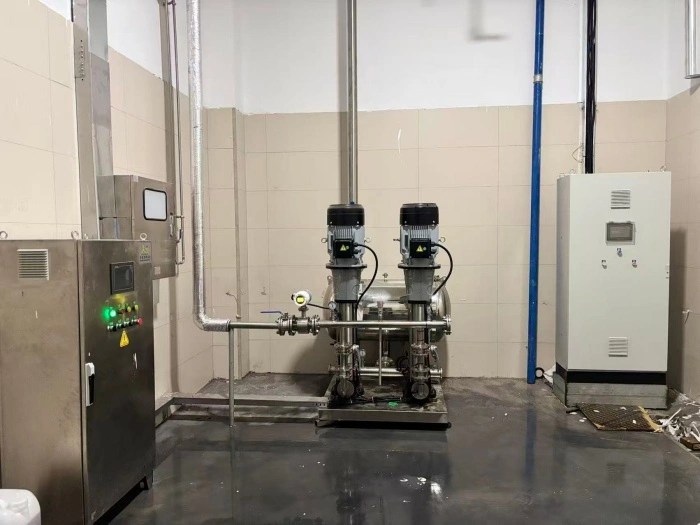
Automation and Control Verification
Compare PLC logic and SCADA monitoring data to actual floor sensor readings. If the measured pressure or flow values differ from the values shown on the control panel, this is an indication of a defective sensor or signal drift. Keep remote monitoring accurate by updating control software when new firmware is available.
Safety and Regulatory Checks
Check that chemical storage locations, dosing rooms and high pressure areas are in accordance with local safety codes. Check that PPE requirements are posted at each tri-function station and operators are using specified procedures on each shift.
Maintenance Best Practices for Longevity and Efficiency
Set a Structured Inspection Schedule
Every day you want to check the chemical tank levels, the hoses condition and the substation indication lights. You need to clean the nozzles and test flow weekly. You should check the performance of the valve, readings on the pump and calibration of the controls once a month. The annual service should include complete pipe examinations and recalibration of the dosing system.
Use Remote Monitoring to Your Advantage
Modern parallel cleaning systems are linked to SCADA systems that record real time information about pressure, flow rate and chemical use. Remote diagnostics enable engineering teams to detect trends, such as a line gradually dropping pressure over time, before they begin to fail. A 2022 Journal of Food Protection study indicated that locations using automated process tracking had an average of 23% less unplanned cleaning downtime.
Train Operators, Not Just Technicians
The people who operate spray guns and hose reels all day long are generally the first to see when anything is wrong. With proper training, they can identify early warning signs like a pump producing odd noises, foam that isn’t as thick as usual, or a hose reel that won't fully retract before something bad happens.
Comparing Maintenance of Multi-Line vs. Single-Line Cleaning Systems
Design Complexity and Resource Demands
To clean a single line, you need one flow path, one set of valves, and one dose point. All of those things are multiplied by a multiline cleaning system that runs four or more units at the same time. This means that repair plans need to be longer, spare parts need to be kept in a bigger inventory, and technicians' schedules need to allow for checks to happen at the same time without stopping production.
Cost of Ownership Over Time
When it comes to a multi-line cleaning system, proactive maintenance always gives a better return on investment than reactive repair. It's much cheaper to replace a broken valve seal than to replace a pump in an emergency during a production shift. The International Journal of Food Engineering (2020) says that over a 3-year period, facilities with structured preventive maintenance programs for cleaning systems had 18–25% lower total maintenance costs than those that only fixed problems as they happened.
Industry-Specific Considerations
In slaughterhouses, there is a lot of blood, fat, and protein waste that makes biofilm growth faster. Food preparation plants have to follow tighter audit rules when it comes to chemical residue limits. Pharmaceutical establishments need validated and recorded cleaning procedures at batch level. Each environment requires a maintenance plan, compatible with the level of contamination and the regulations applicable to this activity .
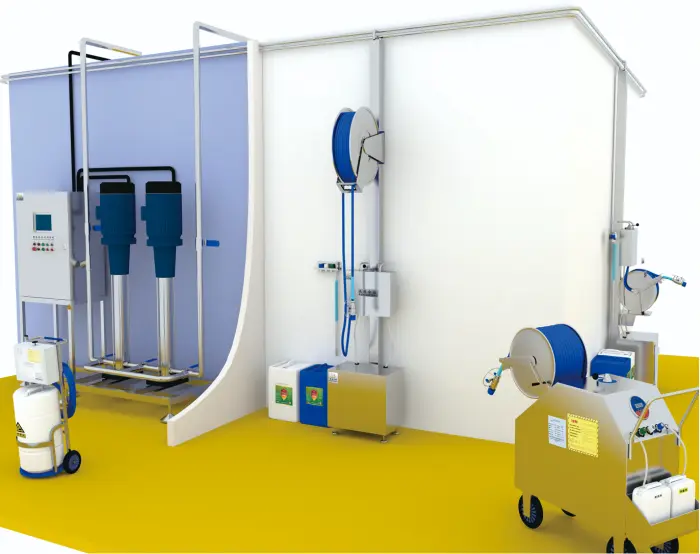
Selecting a Reliable Multi-Line Cleaning System Supplier for Maintenance Support
What to Look for in a Supplier
A trustworthy company that sells multiple cleaning systems should have equipment that is CE-certified, quality management systems that are documented under ISO 9001, and chemicals that are compliant with EU REACH. In addition to certifications, you should look for a provider that has worked in your business for at least ten years, whether it's food processing, meat production, or running a central kitchen.
After-Sales Support That Actually Works
The difference between a long-term partner and a one-time vendor lies in how you respond to consumer demands after the transaction. Your provider should provide technical support by telephone, installation assistance, operator training and written warranty policy. Suppliers must be capable of supporting systems operating at between 15 and 100 bar on four or more parallel lines, not just for routine queries but also for emergency troubleshooting.
Why Customization Matters
There isn't a single facility with the same floor plan, amount of washing stations, or SSOP standards. A good company selling multi-line cleaning systems will not offer you a standard package, but will tailor the number of substations, chemical dosing ratios and control panel interfaces to your specific plan. With 18 years of experience in hygiene engineering, Huamei Wanbang can make unique configurations with 14 working days' wait time.
Conclusion
A parallel cleaning setup like a multi-line cleaning system needs regular maintenance for the pipes, chemicals, automatic controls, and operator training to stay in good working order. In a multiline cleaning system, the mechanical and computer parts work together; if you ignore one area, it affects the whole network. Structured repair plans help businesses protect their output, pass audits with ease, and get more use out of their expensive equipment. Every maintenance job is easier to handle from the start if you choose the right method and the right provider to back it up.
FAQ
1. How often should I inspect the nozzles on a parallel cleaning setup?
In places with a lot of use, like slaughterhouses or fish preparation lines, nozzles should be checked at least once a week. Minerals and chemical residues stick around for a long time. Put needles in a solution to remove scale, and then compare the flow rate to the standard specification. Any tip that is off by more than 15% should be replaced.
2. Can I run different cleaning pressures on different lines simultaneously?
Yes. If you set up your multiline cleaning system correctly, each zone can have its own pressure settings. This is very helpful when one line takes care of sensitive conveyor belts and another takes care of heavy-duty places for cutting and packing. PLC-based control screens make it easy to make changes to individual zones.
3. What is the typical service life of a high-pressure hose?
High-pressure hoses made for food usually last 18 to 36 months with normal industrial use at 40 to 80 bar. Wear and tear, chemical exposure, and bad keeping all lessen that lifespan. Automatic retract reels make working with hoses much easier and last a lot longer.
Ready to Upgrade Your Facility's Hygiene Infrastructure? Contact Homey Wonbond Today
The multi-line cleaning system by Homey Wonbond is made for places that can't afford downtime or audit fails. With 18 years of experience in the field, we are a trusted manufacturer of multi-line cleaning systems. We offer CE-certified and REACH-compliant systems that are set up to meet your exact washing points and SSOP needs. To get a custom price and technical advice, email our engineering team at frank@hmwbcleaning.com or visit hmwbcleaning.com.
References
1. Journal of Food Protection — Vol. 85, No. 4, 2022
2. International Journal of Food Engineering — Vol. 16, No. 3, 2020
3. USDA Food Safety and Inspection Service (FSIS) — Food Safety Report, 2021
4. Food Control — Vol. 112, 2020, Elsevier
5. Trends in Food Science & Technology — Vol. 98, 2020, Elsevier
6. Comprehensive Food Reviews International — Vol. 38, No. 7, 2022
Learn about our latest products and discounts through SMS or email