- English
- French
- German
- Portuguese
- Spanish
- Russian
- Japanese
- Korean
- Arabic
- Greek
- German
- Turkish
- Italian
- Danish
- Romanian
- Indonesian
- Czech
- Afrikaans
- Swedish
- Polish
- Basque
- Catalan
- Esperanto
- Hindi
- Lao
- Albanian
- Amharic
- Armenian
- Azerbaijani
- Belarusian
- Bengali
- Bosnian
- Bulgarian
- Cebuano
- Chichewa
- Corsican
- Croatian
- Dutch
- Estonian
- Filipino
- Finnish
- Frisian
- Galician
- Georgian
- Gujarati
- Haitian
- Hausa
- Hawaiian
- Hebrew
- Hmong
- Hungarian
- Icelandic
- Igbo
- Javanese
- Kannada
- Kazakh
- Khmer
- Kurdish
- Kyrgyz
- Latin
- Latvian
- Lithuanian
- Luxembou..
- Macedonian
- Malagasy
- Malay
- Malayalam
- Maltese
- Maori
- Marathi
- Mongolian
- Burmese
- Nepali
- Norwegian
- Pashto
- Persian
- Punjabi
- Serbian
- Sesotho
- Sinhala
- Slovak
- Slovenian
- Somali
- Samoan
- Scots Gaelic
- Shona
- Sindhi
- Sundanese
- Swahili
- Tajik
- Tamil
- Telugu
- Thai
- Ukrainian
- Urdu
- Uzbek
- Vietnamese
- Welsh
- Xhosa
- Yiddish
- Yoruba
- Zulu
How to Use a Foam Spray Unit for Better Food Plant Hygiene
Proper use of a foam spray unit may greatly improve the cleanliness and compliance of your food processing business. Portable, air-driven devices spray a thick, adhering foam directly onto surfaces, allowing cleaning chemicals the contact time needed to break down fats, proteins and layers of biofilm that water alone can't remove. If you operate a mid-sized slaughter floor or a central kitchen operation, knowing the correct set up, application methods and maintenance routines will enable you to achieve consistent hygiene outcomes – and pass HACCP audits with confidence.
Understanding Foam Spray Units in Food Plant Hygiene
How Foam Adheres and Works
If foam is placed to a vertical wall, a conveyor belt or a stainless steel surface, it does not flow off instantly, but sticks to the surface. This longer dwell time (5 to 15 minutes) helps acidic or alkaline cleaning agents to delve into organic residue and break down biofilm. According to the Journal of Food Protection, foam may enhance contact duration of chemicals with food by as much as 40% compared to direct spray.
Equipment Variations Worth Knowing
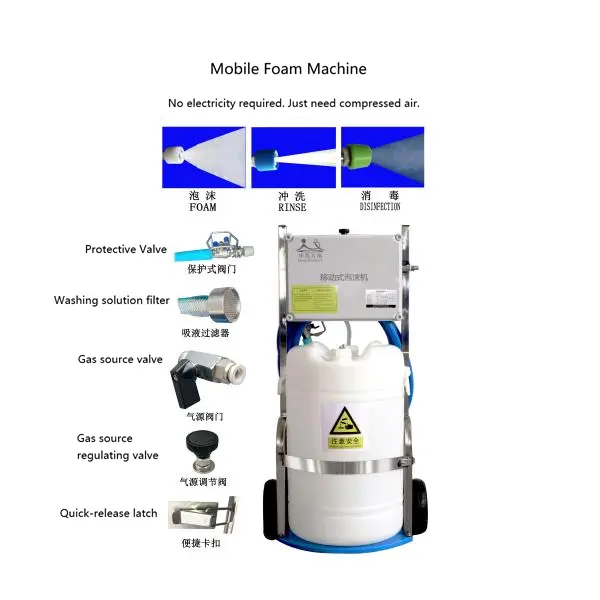
There are different types of foam cleaning tools, such as hydraulic (air-driven), electric, portable, and fixed-installation. Portable air-operated units are the best choice for cleaning up on slaughterhouse floors and while on the go. Since they don't need to be connected to electricity, there is no risk of electrical hazards in areas where food is being processed. There is no need for a power outlet because the Homey Wonbond foam spray unit only needs compressed air at 190 L/min flow and 0.8 MPa pressure to work.
Why HACCP Teams Approve Foam Systems
Food safety auditors want documented repeatable cleaning processes. A foam spray machine helps here, since it ensures that the foam has the same concentration, same area to cover and equal contact length. The uniformity of this facilitates testing during HACCP or third-party cleanliness inspections, particularly when employed with food-grade foaming cleaning chemicals and a strong cleaning record.
Optimizing Foam Spray Unit Use for Superior Hygiene Outcomes
Pre-Cleaning Assessment
Know what kinds of contaminants are in your zone before you start. Alkaline foam agents are required for blood and protein residue on slaughter floors, acidic formulae for mineral scale on equipment. Ensure that the air compressor you choose produces adequate air for your device (190 L/min @ 0.8 MPa for this type). For walls and overhead surfaces, 3 to 5 meters distant from the nozzle gives an even coat with no runs.
Application Best Practices
Apply foam using a foam spray unit starting from the top of ceilings and upper sections of walls to floors and drains. This avoids re-contamination of newly cleaned surfaces. The Homey Wonbond unit has a 15-meter hose, food-grade, that allows workers to maintain a regular spray distance and gives them adequate reach to cover large processing bays without moving the main unit around too frequently.
Here are the core steps for effective foam application:
- Step 1 – Load the foaming agent: Mix food-grade detergent at the manufacturer's recommended dilution ratio into the dosing system.
- Step 2 – Test output before full application: Run a short burst to confirm foam consistency and projection distance (target 3–5 m).
- Step 3 – Apply foam systematically: Work top to bottom, covering all surfaces including wall joints, drain channels, and equipment legs.
- Step 4 – Allow dwell time: Leave foam in contact for the time specified by your detergent supplier—typically 5 to 10 minutes.
- Step 5 – Rinse thoroughly: Use clean water to flush all foam and loosened debris to drains.
By doing these procedures you are meeting the documentation requirements that food safety inspectors expect to see.
Post-Cleaning Verification
After rinsing, visually inspect surfaces and/or conduct ATP swab tests to verify microbial load reduction. Record results in your cleaning log. Any surfaces that fail must be re-foamed before the next production run. This verification loop is what separates reactive cleaning from a well-run sanitation program.
Maintenance and Safety Tips for Foam Spray Units in Food Plants
Routine Maintenance Schedule
Flush the hose and nozzle with clean water after each shift to prevent crystallisation of the detergent in the 8 mm hole of the nozzle. Check the hose connections, seals and the air intake filter frequently. 4. Inspect pneumatic pump for loss of pressure at least weekly, which may indicate damaged diaphragm or seal. Keep a simple maintenance log to document when parts are changed to assist prevent unexpected downtime during busier production times.
Operator Safety Requirements
Operators of foam cleaning equipment must wear chemical resistant gloves, protective glasses and non-slip footwear suitable for damp circumstances. Foaming concentrates should be stored in sealed, appropriately labelled containers away from food contact areas. Do not mix acid and alkaline compounds in the same dosing tank. The Homey Wonbond unit's compressed-air design eliminates electrical risk completely, which is one reason slaughter floor supervisors prefer it in zones where water and electrici
Troubleshooting Common Issues
If foam production is abruptly decreasing down, examine the Y-strainer or intake filter first since these are the most probable sites to suffer obstructions which lower pressure. Usually, if the foam looks watery or does not cling properly, it is due to insufficient dilution of the detergent or low air pressure. Before admitting that the unit is malfunctioning always confirm that your compressor is capable of providing the appropriate flow rate of 190 L/min.
Comparing Foam Spray Units with Traditional Cleaning Methods
Labor and Time Costs of Manual Cleaning
A team of three workers takes 90 minutes or more every shift to hand clean a 200-square-meter killing floor. With a foam spray machine and a single operator, the same area normally takes less than 30 minutes including a dwell and rinse period. Automated foam application has been shown to minimise cleaning labour hours by 35% in mid-sized meat processing plants according to a 2019 Food Control research.
Coverage Consistency
Manual scrubbing often misses wall-floor joints, undersides of equipment and hard-to-reach ceiling structures. A foam spray unit with 3–5 meter projection distance reaches these areas without ladders or additional scaffolding. Uniform foam coverage means fewer gaps in your sanitation record—an important factor during third-party HACCP audits.
Chemical Efficiency
The foam itself retains the chemical on the surface instead than letting it drain away right away, hence foam systems use around 30–50% less detergent per square metre compared to direct spray or bucket and brush techniques. This reduction in chemical use over a year of daily cleaning cycles indicates substantial economic savings and a lessened environmental footprint.
Procurement Insights: Choosing the Right Foam Spray Unit for Your Food Plant
Key Specifications to Evaluate
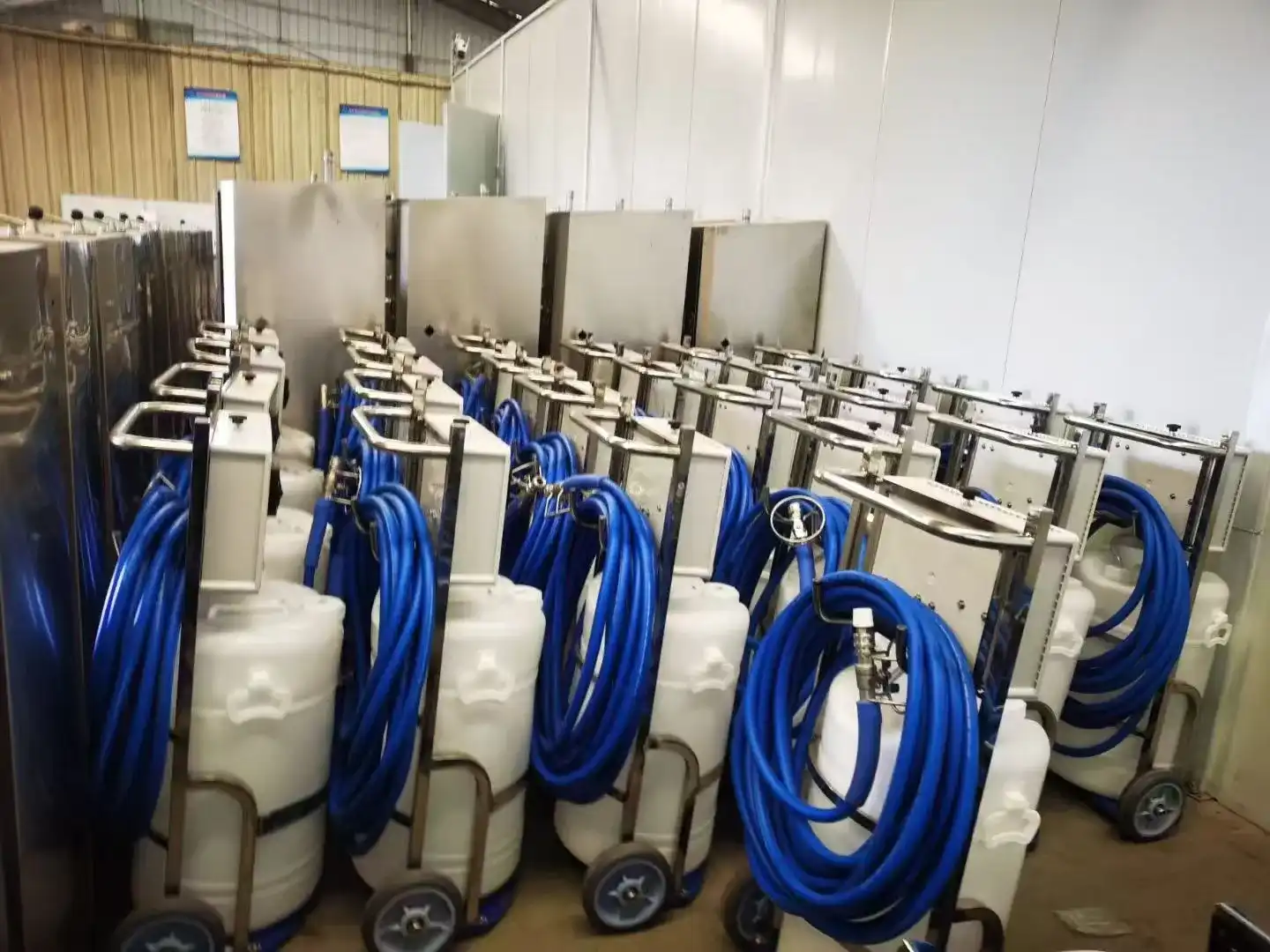
For a medium large slaughter floor or central kitchen you will want something that can put out a foam output of at least 150-200 L/min, that can work at pressures of up to 0.8-1.0 MPa and that has a food grade hose of at least 12 meters. The Homey Wonbond foam spray machine can do all three benchmarks, output of 190 L/min, maximum pressure of 0.8 MPa and 15-meter food-grade hose. At 28 kg and 580×430×1080 mm, it may be independently moved and deployed by one person.
Certifications That Matter for B2B Procurement
In regulated food production environments, equipment must meet documented quality and compliance standards. The Homey Wonbond unit is CE certified and compliant with EU REACH. Huamei Wanbang Biotechnology Group also follows the ISO 9001 quality management norms. If you are a buyer requiring Halal or Kosher certification , these certificates will need to be checked and updated before to purchase . The supplier will assist you through the process.
Total Cost of Ownership
Besides the purchase price, add in hose replacement cycles, nozzle wear and air compressor operation expenses. Customisation possibilities include hose length, nozzle design, and foam concentration ratios. Lead time: 14 working days. Standard units ship from stock immediately. The Group's established logistics partnerships keep international shipping costs below standard market rates, which matters for multi-unit procurement orders.
Conclusion
A foam spray unit, operated correctly, is raising the bar on what's a clean food processing environment. Whether on slaughter floors or central kitchens this combination of high-output foam generation, air-driven operation and increased projection range tackles the real-world issues of industrial sanitation. Homey Wonbond unit from Huamei Wanbang Biotechnology Group is a portable system with 18 years of food hygiene production expertise and HACCP compliant. If your facility is still using manual cleaning procedures, this is a feasible, proven enhancement to consider before your next audit cycle.
FAQ
1. Does the foam spray unit require an electrical connection?
No. The unit runs entirely on compressed air at 190 L/min and 0.8 MPa. This makes it safe for wet food processing zones where electrical equipment presents a hazard.
2. What cleaning chemicals are compatible with this system?
For proper dilution and pressure settings, both food grade alkaline and acidic foaming agents are suitable. Contact Homey Wonbond for specific chemical pairing recommendations.
3. How often should the nozzle and hose be cleaned?
After each shift, cleanse the nozzle and the whole 15-meter hose with clean water to prevent detergent buildup inside the 8 mm nozzle bore. Inspect seals and connections monthly.
Partner with Homey Wonbond for Your Next Foam Spray Unit Order
Keep your food processing facility cleaner, safer, and easier to manage with the foam spray unit from Huamei Wanbang Biotechnology Group. Since 2011, Huamei Wanbang has focused on providing cleaning and disinfection solutions for food processing, animal farming, healthcare and other demanding areas. Our foam spray device uses compressed air to generate 190 L/min of foam and has a reach of 3-5 meters. It comes with 15 meters of food grade hose to effectively cover floors, walls, equipment and hard-to-reach locations. CE certificate, ISO9001 quality management, cleaning chemicals in compliance with REACH, OEM / ODM customisation, technical assistance from installation to operation, more than one machine we can give. Stock units available, may be supplied from stock. Custom models can be manufactured in 14 working days. Please contact Frank at Huamei Wanbang at frank@hmwbcleaning.com to get specs, discuss your cleaning needs and receive a quote for your facility.
References
1. Journal of Food Protection — Volume 82, Issue 4, 2019
2. Food Control — Volume 99, 2019
3. Comprehensive Reviews in Food Science and Food Safety — Volume 18, Issue 3, 2019
4. International Journal of Food Microbiology — Volume 289, 2019
5. Meat Science — Volume 152, 2019
6. Journal of Food Engineering — Volume 246, 2019
Learn about our latest products and discounts through SMS or email