- English
- French
- German
- Portuguese
- Spanish
- Russian
- Japanese
- Korean
- Arabic
- Greek
- German
- Turkish
- Italian
- Danish
- Romanian
- Indonesian
- Czech
- Afrikaans
- Swedish
- Polish
- Basque
- Catalan
- Esperanto
- Hindi
- Lao
- Albanian
- Amharic
- Armenian
- Azerbaijani
- Belarusian
- Bengali
- Bosnian
- Bulgarian
- Cebuano
- Chichewa
- Corsican
- Croatian
- Dutch
- Estonian
- Filipino
- Finnish
- Frisian
- Galician
- Georgian
- Gujarati
- Haitian
- Hausa
- Hawaiian
- Hebrew
- Hmong
- Hungarian
- Icelandic
- Igbo
- Javanese
- Kannada
- Kazakh
- Khmer
- Kurdish
- Kyrgyz
- Latin
- Latvian
- Lithuanian
- Luxembou..
- Macedonian
- Malagasy
- Malay
- Malayalam
- Maltese
- Maori
- Marathi
- Mongolian
- Burmese
- Nepali
- Norwegian
- Pashto
- Persian
- Punjabi
- Serbian
- Sesotho
- Sinhala
- Slovak
- Slovenian
- Somali
- Samoan
- Scots Gaelic
- Shona
- Sindhi
- Sundanese
- Swahili
- Tajik
- Tamil
- Telugu
- Thai
- Ukrainian
- Urdu
- Uzbek
- Vietnamese
- Welsh
- Xhosa
- Yiddish
- Yoruba
- Zulu
Meat Stuffer Washer: Tackling Grease and Meat Residue
A meat stuffer washer is a purpose-built industrial cleaning machine intended to remove hardened oil, protein deposits, and meat residue from sausage and ham stuffing equipment. In facilities that run hydraulic stuffers, vacuum stuffers, and twisting lines, residue builds rapidly – and hand washing seldom reaches internal dead zones. A correctly configured stuffer washer solves such blind spots, lowers cross-contamination between product runs, and offers your organization a significant advantage during ISO 22000 or FSSC 22000 audits. This essay explains over how these systems function, what to look for, and how to make a confident purchase choice.
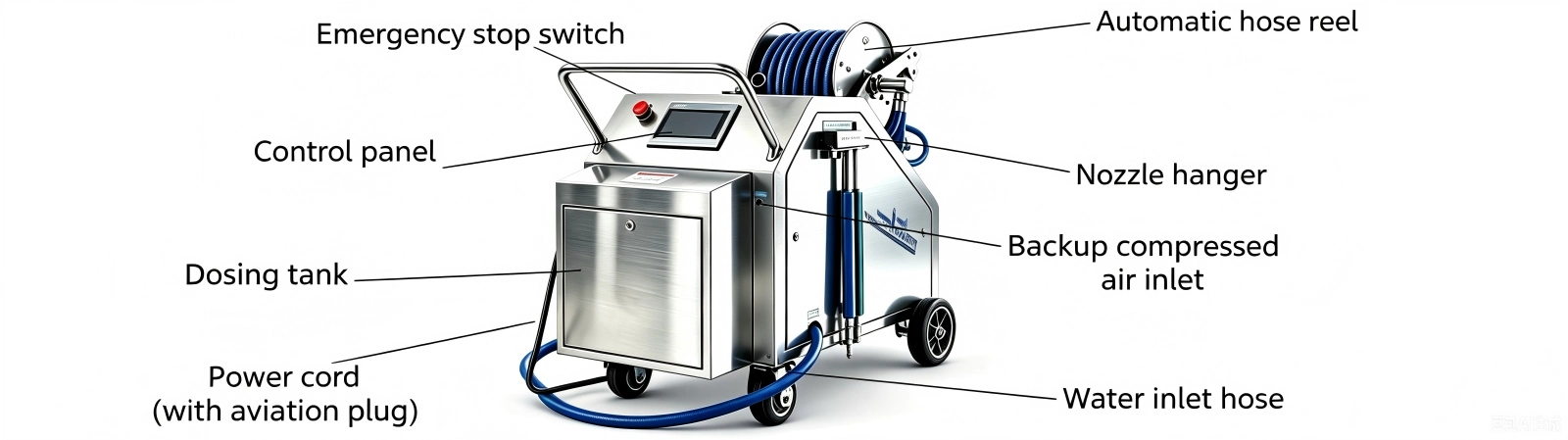
Understanding Meat Stuffer Washers and Their Importance
What a Stuffer Washer Actually Does
Every time you stuff sausage or ham, fat and protein adhere to the inside surfaces of the stuffer. Most cleaning procedures leave residues in the piston clearances, valve seats and cylinder bores. A unique meat-stuffer washer directs water pressure directly into specific locations, often with foam soap or disinfection. This breaks down fat and flushes out particles that are stuck that cleaning by hand would miss.
Materials and Hygiene Design Standards
All wet surfaces on equipment made for areas where food will be touched should be made of SUS 304 stainless steel. The design concepts for hygiene—smooth welds, no cracks, and fully drainable shapes—are in line with ISO 22000 and FSSC 22000 standards. These standards are important because inspectors look at more than just cleaning logs. They also look at how the equipment is built. Your certification status is protected if the washer meets these design criteria.
Why Automation Outperforms Manual Cleaning
Hand scrubbing is laborious, time consuming and inconsistent. When high-pressure cleaning is done automatically, the same effects are achieved time after again. Studies on the cleanliness of food processing show that high-pressure water jets of 30-40 bar are more effective than brushes and sponges in removing bacteria from stainless steel surfaces. Cleaning done the same way every time reduces the chance of cross-contamination between production runs of Listeria and Salmonella.
Best Practices for Cleaning and Maintaining Your Stuffer Cleaning Equipment
Recommended Cleaning Intervals
Full cleaning after each shift is the usual for facilities that have two or more work shifts every day. When facilities move from one allergen to another, like from pork to chicken, they need to clean and disinfect all of their equipment completely between runs. Post-production operations can follow a daily cycle for lighter-use tasks. The most important factor is the type of residue: making sausages with a lot of fat needs more frequent attention than making sausages with less fat.
Step-by-Step Cleaning Protocol
First, pick off any large pieces of trash by hand. Second, apply an alkaline foam detergent and allow it to sit for a short time, generally 5 to 10 minutes. Third, flush the meat stuffer washer with high pressure water, concentrating on the inside of the cylinder and the nozzle assembly. Fourth, spray a food-grade disinfectant on the washer. Fifth, rinse and allow to drain completely before reassembly. This order is in line with the HACCP rules for cleanliness that are used in the meat processing business.
Preventive Maintenance to Extend Equipment Life
Regular inspections help protect the life of tools, as well as cleaning processes. Check the tips of nozzles weekly for wear and blockages. Inspect hose connections and seals every 50 hours of use. Follow the manufacturer's recommendations for how often moving parts should be lubricated. By replacing the old nozzle tips promptly, pressure output and cleaning efficiency are maintained at a high level. This is a small maintenance task that avoids bigger problems in the future.
Comparing Meat Stuffer Washer Options for B2B Procurement
Industrial vs. Light-Duty Equipment
For the professional banger maker, it makes a difference if the cleaning equipment are heavy-duty or light-duty. Small-scale jobs might be adequately served by light-duty units, but plants with 30 to 100 workers on numerous stuffing lines require machines that can run constantly, hold pressure over a long hose, and clean multiple functions in a single pass. Choosing equipment that is not powerful enough may cost you extra in labour and cleaning cycles.
Key Evaluation Criteria for Procurement Managers
When looking for a stuffer cleaning device for a business processing floor, the total cost of ownership is affected by the following factors:
- Pressure output: A minimum of 35 bar is recommended for removing hardened fat from cylinder interiors and nozzle seats in hydraulic and vacuum stuffers.
- Hose reach: A 25-meter hose covers most multi-section processing floors without repositioning the base unit. Extendable to 30 meters for larger facilities.
- Multi-function valve: The ability to switch between water, foam detergent, and disinfectant from a single handle removes the need for separate tool changes during cleaning cycles.
- Mobility: Quick-connect fittings and a wheeled frame allow the unit to move between production rooms, cold storage, and processing lines within minutes.
These criteria help people in charge of buying things make sure that the equipment they buy fits the facility's needs and that the facility doesn't waste money on extra capacity that it will never use.
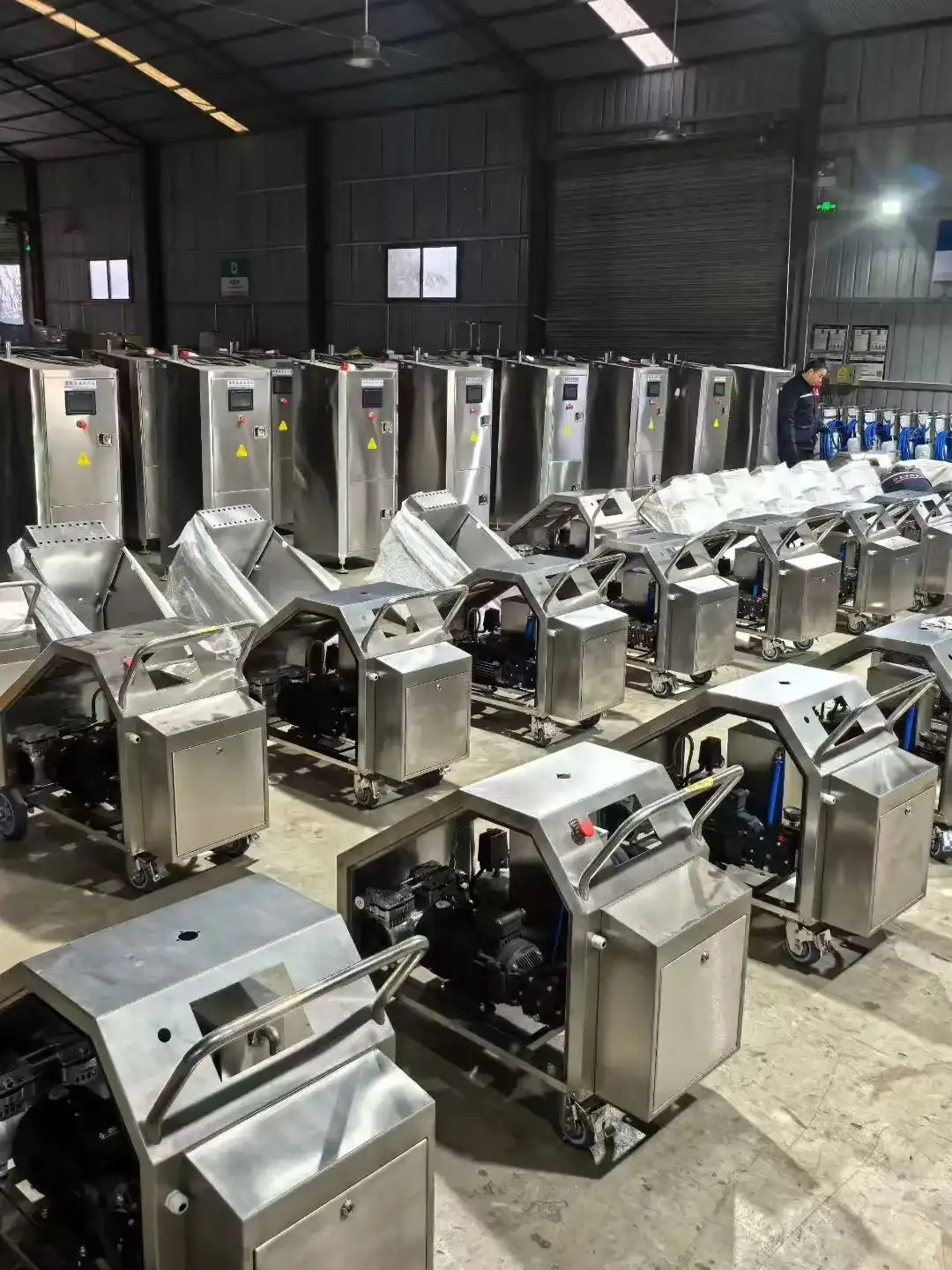
Troubleshooting and Optimizing Stuffer Washer Performance
Diagnosing Common Operational Issues
The most common problem that operators on the processing floor report is a drop in pressure. A worn or clogged nozzle tip, a kinked hose, or a loose connection at the quick-connect fitting is probably the cause. If there's not enough water pressure at the input, the motor can make noise that’s not typical. This often indicates a problem with the cavitation of a pump. If you spot these indicators early, you can prevent a machine malfunction from worsening during the workday.
When to Replace Parts vs. Repair
Nozzle tips and hose seals wear out over time, so it's better to repair them before they break than to wait until they do. The Huamei Wanbang meat stuffer washer has a patented design (Patent No. ZL201822250Q21.X), which means that new parts are made to very exact measurements. Using OEM-sourced parts keeps the equipment working the way it was meant to and keeps the guarantee from getting messed up.
Operator Training for Consistent Results
The equipment only performs due to the skill of the operator. Training should include the correct way to handle a hose to avoid kinking, choosing the appropriate tip for each cleaning situation, and the safe use of chemicals such as foam soaps and disinfectants. An operator who has been properly trained will produce better cleaning results per cycle and will prolong the life of the equipment, both of which have an immediate effect on your building's cleanliness test scores.
Procurement Strategies: How to Buy the Right Stuffer Cleaning System
New vs. Used Equipment Considerations
When used cleaning equipment is used in a food processing facility, it poses real risks because the seals are worn, the service history is unknown, and there is no guarantee coverage. The cost savings from a used unit rarely outweigh the compliance risk for a business getting ready for export audits or ISO certification reviews. New equipment with certifications and a guarantee from the maker gives regulators and inspectors a paper trail they can use to back up their claims.
Aligning Features with Facility Requirements
The mobile cleaning system from Huamei Wanbang uses standard 220V/1.5kW power, which means that most facilities can use their existing wiring without having to do any work. It can fit through standard doorways and into tight production areas thanks to its small size (1450 x 520 x 1060 mm, 148 kg). Facilities that need unique tip arrangements or longer hose lengths can ask for changes, and they will be delivered in 14 business days.
Total Cost of Operation
When clients use this method instead of traditional ways of cleaning, they say they use 30–45% less water. When that amount is spread out over thousands of cleaning cycles a year, it directly leads to lower utility costs and less wastewater treatment volume. These are real, measurable saves that back up the business case for approval of the purchase.
Conclusion
It's not just a matter of keeping stuffing equipment clean when grease and meat are building up on it; it's also a matter of compliance, contamination, and audit liability. A system designed just for washing stuffers solves these issues in a planned, consistent, and easy way, without requiring too much work. With a 25-meter reach hose, 35-bar pressure, a 3-in-1 valve system, and the ability to be moved around, the Huamei Wanbang meat stuffer washer meets CE standards and is chemically compatible with REACH. This level of cleaning performance is not a luxury for facilities that are in charge of sausage or ham production lines that have to meet export requirements.
FAQ
1. Does the meat stuffer washer work with hydraulic and vacuum stuffers?
Yes. The 35-bar pressure output and adjustable nozzle tips allow effective cleaning of hydraulic stuffer cylinders, vacuum stuffer chambers, and associated nozzle assemblies. The 25-meter hose reaches internal components without full disassembly in most configurations.
2. How often should I run a full cleaning cycle on my stuffer cleaning equipment?
For high-volume facilities running two or more shifts, a full cleaning cycle after each production shift is the standard recommendation. Allergen changeovers require a complete flush and disinfection between product runs regardless of shift schedule.
3. Can I source replacement parts directly from the manufacturer?
Yes. Huamei Wanbang supplies OEM replacement parts including nozzle tips, hose seals, and valve components. Parts ship quickly to reduce production downtime. Contact the team through hmwbcleaning.com or frank@hmwbcleaning.com for parts availability and lead times.
Ready to Eliminate Residue Buildup? Contact Homey Wonbond Today
The Huamei Wanbang meat stuffer washer is sold by Homey Wonbond to processing plants and equipment distributors all over the world. If you are looking for a meat stuffer washer supplier for your sausage or ham production line, our team can help. We offer full technical specs, customization options, and quick support after the sale. You can email us at frank@hmwbcleaning.com or go to hmwbcleaning.com to get a quote or talk about the specific needs of your building.
References
1. Marriott, N.G., Schilling, M.W., & Gravani, R.B. Principles of Food Sanitation (6th ed.). Springer. 2018.
2. Lelieveld, H.L.M., Holah, J., & Gabric, D. Handbook of Hygiene Control in the Food Industry (2nd ed.). Woodhead Publishing. 2016.
3. Food and Agriculture Organization of the United Nations. Manual on Meat Cold Store Operation and Management. FAO Animal Production and Health Paper. 2004.
4. Tompkin, R.B. "Control of Listeria monocytogenes in the food-processing environment." Journal of Food Protection. 2002.
5. International Organization for Standardization. ISO 22000: Food Safety Management Systems — Requirements for Any Organization in the Food Chain. ISO. 2018.
6. Holah, J.T. "Industrial cleaning and disinfection." Chilled Foods: A Comprehensive Guide (3rd ed.). Woodhead Publishing. 2008.
Learn about our latest products and discounts through SMS or email