- English
- French
- German
- Portuguese
- Spanish
- Russian
- Japanese
- Korean
- Arabic
- Greek
- German
- Turkish
- Italian
- Danish
- Romanian
- Indonesian
- Czech
- Afrikaans
- Swedish
- Polish
- Basque
- Catalan
- Esperanto
- Hindi
- Lao
- Albanian
- Amharic
- Armenian
- Azerbaijani
- Belarusian
- Bengali
- Bosnian
- Bulgarian
- Cebuano
- Chichewa
- Corsican
- Croatian
- Dutch
- Estonian
- Filipino
- Finnish
- Frisian
- Galician
- Georgian
- Gujarati
- Haitian
- Hausa
- Hawaiian
- Hebrew
- Hmong
- Hungarian
- Icelandic
- Igbo
- Javanese
- Kannada
- Kazakh
- Khmer
- Kurdish
- Kyrgyz
- Latin
- Latvian
- Lithuanian
- Luxembou..
- Macedonian
- Malagasy
- Malay
- Malayalam
- Maltese
- Maori
- Marathi
- Mongolian
- Burmese
- Nepali
- Norwegian
- Pashto
- Persian
- Punjabi
- Serbian
- Sesotho
- Sinhala
- Slovak
- Slovenian
- Somali
- Samoan
- Scots Gaelic
- Shona
- Sindhi
- Sundanese
- Swahili
- Tajik
- Tamil
- Telugu
- Thai
- Ukrainian
- Urdu
- Uzbek
- Vietnamese
- Welsh
- Xhosa
- Yiddish
- Yoruba
- Zulu
How Does an Ozone Generator Support Food Processing Hygiene?
Ozone technology has become one of the most valuable technologies in current food processing hygiene. The stainless steel ozone generator uses high voltage corona discharge to generate O3 gas. Ozone is a potent oxidiser that kills bacteria, mould and airborne diseases on contact. Ozone does not leave any residues like formaldehyde fumigation or chemical disinfecting and is much simpler to pass EU & FDA residues examination. The SUS 304 housing resists corrosion in cold, humid settings (the kind of circumstances seen in food cool rooms, packing zones and meat processing plants).
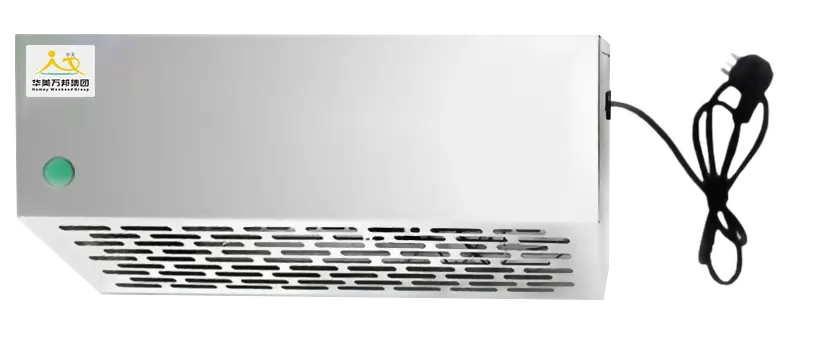
Understanding Stainless Steel Ozone Generators in Food Processing Hygiene
How Ozone Works as a Disinfectant
Ozone (O₃) is an unstable chemical that may destroy the walls of microbial cells in a matter of seconds. It kills bacteria such as E. coli and Salmonella, conceals odours and reduces the amount of mould spores in the air and it leaves no chemicals on food or equipment. The FDA states that when used properly in food-contact settings, ozone is GRAS (Generally Recognised As Safe).
Why the Housing Material Matters
When the temperature is between 0°C and 10°C, the fog and humidity remain the same. As time goes on, powder-coated steel corrodes and plastic casings break down, producing particles that might pollute the work environment. The ozone generator is built of a food-grade stainless steel SUS 304, and will maintain its solid structure for years of everyday usage without any rust or surface wear that might impact ozone quality.
Corona Discharge Technology Explained
Most industrial ozone generators use corona discharge, a process in which high voltage flows through a dielectric gap and breaks apart O₂ molecules. These molecules are then put back together as O₀. This method makes ozone amounts that are stable and easy to measure. This is helpful for quality assurance teams that need to keep records of HACCP compliance and disinfection rounds.
Advantages of Stainless Steel Ozone Generators Over Alternatives
Corrosion Resistance in Demanding Environments
SUS 304 stainless steel can stand up to daily exposure to ozone, cleaning products, and humidity, all of which break down plastic or metal units very quickly. Total cost of ownership goes down directly when equipment lasts longer. When buying something, it's better to get something that works regularly for five years or more without housing failure than something cheaper that needs to be replaced often.
Easier Compliance with International Food Safety Standards
Food processing plants that want to sell their products in the EU or FDA must show that their methods of cleaning don't leave behind any dangerous substances. Within minutes, ozone breaks down naturally back into oxygen, leaving behind no chemicals. The stainless steel ozone generator that was made to meet ISO 9001 and EU REACH standards is proof for quality assurance managers that their disinfecting equipment is made to meet international standards.
Stable Output and Energy Efficiency
Designs that are cooled by air keep the ozone concentration steady over long cleaning processes by preventing thermal buildup during extended operation. At 100W, the unit has a good mix between low running costs and high output (5 g/h at 10–15 mg/L concentration). The operating budget stays the same from month to month because there are no filter replacements, chemical purchases, or coolant needs.
These three benefits directly address the main concerns of people who make procurement decisions: long-term cost control, regulatory compliance, and durability. Each of these factors makes the operational risk profile lower than with traditional chemical disinfection methods.
Key Applications in Food Processing Hygiene
Cold Storage and Packaging Zones
When cold rooms are set to 0–10°C, they create certain problems, like mold growth on the walls and ceilings, surface contamination on product packaging, and the buildup of pathogens in the air. During planned off-shift times, ozone disinfection units that are placed on the walls clean the whole room. The formula is simple: 40 × 0.12 = 4.8 g/h of output is needed for a 40 m³ cold room. A 5 g/h unit gives you enough coverage with a little extra room for error.
Meat Processing and Slaughter Facilities
Cutting rooms, chill rooms, and places where animals are killed have a lot of microbes because they are full of organic matter. Formaldehyde chemical fogging has been used in these areas in the past, but concerns about residue and worker safety rules are forcing facilities to switch. Formaldehyde fumigation can be replaced with ozone-based air and surface disinfection, which doesn't require as long of an evacuation period and doesn't leave any residue on equipment or contact surfaces.
Pre-Processing Rooms and Staff Entry Points
Short-cycle ozone treatments between shifts are good for areas like wash-down rooms, vegetable prep areas, and staff change rooms. Bacteria build up in these places from raw materials and people touching them. A microcomputer can be used to schedule or direct a timed disinfection cycle that can run immediately when the last worker leaves. This makes sure that the space is clean before the next shift starts.
The above uses cover the main places where contamination could happen in a typical food preparation scheme. Programmable, controlled disinfection that works regardless of production plans is helpful in all of these situations.
Installation, Operation, and Maintenance Tips
Site Assessment and Placement
When mounted on the wall at a height of 1.8–2.2 m, the ozone is spread out evenly throughout the room. Before you place it, use the volume × 0.12 method to make sure the unit's 5 g/h output is right for the room. This unit is 53 × 17 × 24 cm and weighs 7.5 kg. It fits standard wall brackets and doesn't need to be mounted in a stronger way.
Scheduling and Remote Control Operation
The microcomputer timer of the stainless steel ozone generator lets QA managers set cleaning cycles that work with shift changes, cleaning plans, or times when they need to get ready for an audit. The ability to use a remote control gives places more options when the equipment room is not easily available. For HACCP record-keeping, both control modes allow you to write down the frequency and length of the disinfection cycle.
Safety Protocols and Maintenance
When the level of ozone is higher than 0.1 ppm (the OSHA safe exposure limit), people must leave the area while it is being actively disinfected. Set up fixed ozone monitors at eye level of workers to find leaks. The only maintenance that needs to be done is to periodically clean the air intake vents of dust and check the electrical connections every time the service is due. The air-cooling system doesn't need any new coolant or filters.
Procurement Guide: Selecting the Right Unit for Your Facility
Key Technical Specifications to Evaluate
When comparing ozone disinfection equipment, QA procurement teams should examine ozone output (g/h), concentration stability (mg/L), housing material grade, power input compatibility (AC 220V/50Hz), and weight. Lightweight units at 7.5 kg reduce installation labor costs and allow repositioning between zones if facility layouts change.
Here are the core specifications of the Homey Wonbond unit at a glance:
- Ozone Output: 5 g/h
- Ozone Concentration: 10–15 mg/L
- Power Consumption: 100W | AC 220V / 50Hz
- Cooling Method: Air cooling (zero consumables)
- Housing: SUS 304 stainless steel
- Dimensions: 53 × 17 × 24 cm | Weight: 7.5 kg
- Control: Microcomputer timer + remote control
- Certifications: CE certified, ISO 9001, EU REACH compliant
- Customization: Available | Lead time: 14 working days
These specifications make the unit well-suited for food cold rooms, packaging zones, and meat processing areas where corrosion resistance and residue-free disinfection are non-negotiable.
Certification and Compliance Documentation
Procurement teams exporting to EU or US markets should confirm that the equipment supplier holds CE certification and that manufacturing processes comply with ISO 9001. Halal, Kosher, or FDA-specific certifications related to food production standards require buyers to submit their own facility documentation — the equipment manufacturer's ISO 9001 and EU REACH filings support but do not substitute for facility-level compliance.
Customization and After-Sales Support
Standard models ship from stock. Custom configurations — adjusted ozone concentration ranges, alternative mounting configurations, or modified timing sequences — are available with a 14-working-day production window. After-sales support includes remote technical guidance, on-site installation assistance where applicable, and operator training to ensure QA teams can manage the equipment confidently from day one.
Conclusion
Ozone cleaning is a tried-and-true way to keep food processing areas clean without leaving behind any waste. A well-designed stainless steel ozone generator takes care of the contamination risks in cold rooms, packaging areas, and meat processing areas without leaving behind chemical residues that make it harder to follow EU or FDA rules. Ozone technology is a good long-term investment for QA managers who care about both safety and cost control because it is made of SUS 304, has customizable settings, is air-cooled, and doesn't need any consumables. When procurement teams choose a CE-certified unit from a maker with detailed ISO 9001 processes, they know that the equipment will work well even when it is used every day in the workplace.
FAQ
1. How do I calculate the ozone output my space needs?
To find the output in g/h, multiply the cubic meters of the room by 0.12. A 40 m³ cold room needs about 4.8 g/h, so the 5 g/h model has a small operating cushion that is enough for this room.
2. Is ozone safe to use in food processing areas?
The FDA says that ozone can be used in applications that come into contact with food. During active disinfection processes, people must leave areas that have been cleaned. Fixed ozone monitors should be put in place to make sure that levels drop to safe levels (below 0.1 ppm) before re-entry.
3. Does the unit require filters or chemical inputs?
Not at all. The gas supply system that comes from the air doesn't need any filters, chemicals, or coolants. The only cost of doing business is energy, which is 100W per turn.
Partner with Homey Wonbond for Industrial Ozone Disinfection Solutions
Homey Wonbond sells stainless steel ozone generators that are CE-certified and made for use in food preparation, cold storage, and meat handling areas. As a known stainless steel ozone generator maker with 18 years of experience, ISO 9001 quality management, and the ability to fully customize our products, we can help QA teams from the specification stage all the way through installation. To get product specs, a site-specific ozone output calculation, or a purchase price, please email our technical team at frank@hmwbcleaning.com or visit hmwbcleaning.com.
References
1. Rice, R. G., & Netzer, A. (Eds.). Handbook of Ozone Technology and Applications. Ann Arbor Science Publishers, 1982.
2. U.S. Food and Drug Administration. Secondary Direct Food Additives Permitted in Food for Human Consumption: Ozone. FDA Federal Register, 2001.
3. Kim, J. G., Yousef, A. E., & Dave, S. "Application of Ozone for Enhancing the Microbiological Safety and Quality of Foods." Journal of Food Protection, 1999.
4. Khadre, M. A., Yousef, A. E., & Kim, J. G. "Microbiological Aspects of Ozone Applications in Food: A Review." Journal of Food Science, 2001.
5. European Food Safety Authority (EFSA). Scientific Opinion on the Safety and Efficacy of Ozone for the Decontamination of Poultry Carcasses. EFSA Journal, 2013.
6. Brodowska, A. J., Nowak, A., & Śmigielski, K. "Ozone in the Food Industry: Principles of Ozone Treatment, Mechanisms of Action, and Applications." Critical Reviews in Food Science and Nutrition, 2018.
Learn about our latest products and discounts through SMS or email